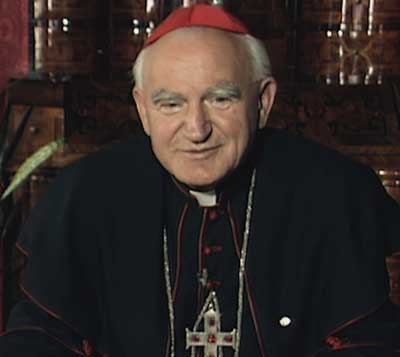
The future Archbishop of Zagreb and Cardinal of the Holy Roman Church, Fr Franjo Kuharić, became administrator of the parish of St Martin in September 1946. By a decision of 28 August 1946, Archbishop Stepinac appointed him administrator of the parishes of Rakov Potok and Pavučnjak. He took up his duties four days later, on 1 September. A few days after his arrival in the new parish, on 12 September, Pavao Bedenik — then his neighbouring parish priest — was murdered. Fr Kuharić thereupon became administrator of the parish of St Martin. Initially he resided in Rakov Potok and came to St Martin only to celebrate Mass and teach religious education. This continued until 22 February 1947, when an attempt was made on his life. He withdrew to Zagreb for a few days, and thereafter came to St Martin and Rakov Potok only occasionally, passing through Sveta Nedelja, which was also entrusted to his pastoral care for several weeks. Fr Franjo Kuharić remained in St Martin and Rakov Potok until November 1957. What follows are his own recollections of those years.
"Divine Providence placed me, too, for a time beneath Okić. I spent a full eleven years in that area as parish priest of the parishes of Rakov Potok and St. Martin under Okić, and for a short period I also administered the parish of St. Mary of Okić — known also as Okić St. Mary. The Archbishop of Zagreb, Alojzije Stepinac, wished to bring about a spiritual renewal and religious uplift in the southern part of the parishes under Okić, and to that end he established new parishes: Rakov Potok, Pavučnjak, and Klinča Selo. He did so in 1945. Neither Pavučnjak nor Klinča Selo had any chapel, so parish life could not be organised immediately in each of these new parishes. Only in Rakov Potok was there a modest little church of the Most Sacred Heart of Jesus, which served as the centre of pastoral work. The Archbishop entrusted the administration of these new parishes to the Jesuit Father Mato Jović. He took up residence in an old, fairly spacious house in the centre of the village. That house also accommodated the militia of the new communist authorities, contained one classroom, and provided lodgings for a family as well. The owners were two widows: a mother-in-law and her daughter-in-law. It was the house of the Mavračić family, in which a small room was also found for the priest. Father Jović settled there, but stayed for only a year.
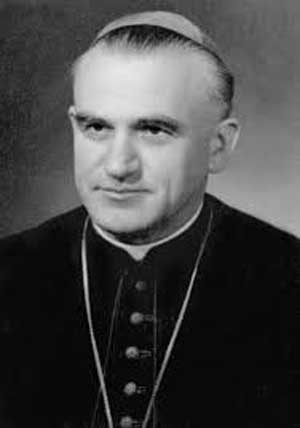
I served as a curate in Croatian Zagorje, in the parish of Radoboj, from 1 November 1945 to 31 August 1946. When I came to Zagreb in August of that year to sit the curate's examination, Archbishop Stepinac summoned me for a conversation. He told me that he intended to transfer me from Radoboj and wished to entrust me with the administration of the new parishes centred on Rakov Potok. He described the situation of that parish to me — both spiritual and material. Everything was extremely modest. The communists in that area were very "zealous" in their ideology and harsh in their exercise of their new authority, and gave little promise of an easy time for the Church. He said to me: "It is a little Stalingrad!" I did not hesitate for a single moment before accepting the transfer and the situation it entailed. When we were ordained on 15 July 1945 and news began to arrive of priests who had been murdered, of the "Way of the Cross", of the persecution of prominent believers and Croatians, the Archbishop — moved by these tragic events — said to us at table: "I am sending you into a bath of blood!" There were fifteen of us diocesan newly-ordained priests and seven from religious orders. We had no illusions. We faced reality squarely and were prepared, by the grace of God, to lay down our very lives for the Gospel, for Jesus Christ, and for the Church. We were conscious that our priestly calling meant the highest possible service to the good of the Croatian people. We were in no way confused or faint-hearted at being declared "enemies of the people" in the newspapers. We were young, filled with enthusiasm for God's cause, and we went without question wherever we were sent. Not one of my fellow ordinands from 1945 betrayed the hopes our Archbishop had placed in us!
And so on 1 September 1946 I took up my post as administrator of the new parishes in Rakov Potok — in that "little Stalingrad"! A few days after my arrival, I was visited by the parish priest of St Martin beneath Okić, the Reverend Pavao Bedenik. He too was a young priest, faithful and zealous, who had been transferred to St Martin after being subjected to persecution in a Slavonian parish. We agreed that I would return his visit the following week, and we fixed a day. However, the experience of the "bath of blood" was now beginning to become reality. On the morning of the very day I was to go to St Martin, news arrived that the parish priest Pavao Bedenik had been shot dead the previous evening outside the presbytery, in the presence of several women who were making jam in the courtyard. He had been killed with a hunting rifle from behind the corner of the parish house. The militia was quartered beneath my room. I heard some cheerful shouting. I concluded that it was an echo of the sorrowful news from St Martin beneath Okić.
I immediately cycled to Brezovica to see the dean, the Very Reverend Adolf Dušić, and informed him of the murder of the parish priest. He told me to take over the administration of the parish, to go to St. Martin, and to make the necessary arrangements for the burial of the slain priest. Late in the afternoon I set off for St. Martin for the first time, passing through Brezina, where an ambush could always be expected on account of the woodland terrain. When I caught sight of the chapel of St. Roch on Galgovo, I thought that was St. Martin, but I had to descend by a steep path into a valley that at that moment felt oppressively dark to me. I found the dead priest in his house, and at the entrance an officer of OZNA was questioning Mrs. Tomljenović, who had been sheltering with her husband — a retired judge — at the parish priest's home and had been keeping house for him. OZNA, I presume, knew who had killed the parish priest and why, but was "seeking" the perpetrators while casting suspicion on the priest's integrity. Needless to say, the perpetrators were never found.
We held the farewell service in the parish church of St. Martin with the participation of a great number of the faithful. The funeral procession accompanied the body of the murdered parish priest as far as the Cross below Konščica, whereupon his brothers drove him to his home parish of Petrijanec. And so I became administrator of the parish of St. Martin.
Every Sunday morning I would come from Rakov Potok by bicycle or on foot to St. Martin, where I celebrated Mass at nine o'clock. After Mass I would return to Rakov Potok for the midday Mass. It gladdened me to see that a considerable number of men attended Mass in St. Martin and also led the singing. Ivan Razum from Konščica, together with his family, was particularly prominent in this.
In those days the Archbishop of Zagreb, now a Servant of God, Alojzije Stepinac, had been imprisoned. I visited my neighbour, the parish priest of Sveta Nedelja. He was the Very Reverend Pavao Srketić, who had in fact been the one to send me to the Seminary in 1931, when he was parish priest in Krašić. He had also preached at my first Mass in Pribić on 19 August 1945. He was a particularly warm and dear priest, deeply devout. He was my confessor. The day before, the Archbishop had been imprisoned. As I was cycling back from Sveta Nedelja towards Kalinovica, the militia commander from Rakov Potok, Stanko, caught up with me, also on a bicycle. We rode side by side. He asked me: "What's the news?" — I replied: "I don't know!" — He then asked: "And what do people say about Stepinac being arrested?" — I said: "Everyone has their own thoughts!" — Then he asked: "And what do you think?" — I replied: "I think he is not guilty; he is innocent!" — Then he said to me: "How is it that they don't arrest me or you, if they are arresting innocent people?" — I replied: "Archbishop Stepinac means something to the Croatian people!"
I believe that this, too, was a reason for the organised attempt on my life, which was made on the evening of 22 February 1947. It was a Saturday. The snow was thawing. It was not possible to travel by bicycle. That Saturday I made an exception: instead of going to St. Martin on Sunday morning, I went on that Saturday late in the afternoon. As I had no room in the parish house, which had been taken over for other purposes, I would spend the night with the family of Lujo Holetić and his brother. After the murder of the parish priest, the Tomljenović family had also taken lodgings with them.
I celebrated Holy Mass at nine o'clock and set off on foot for Rakov Potok — five kilometres away. When I had climbed up to Galgovo, the bell-ringer from Rakov Potok, Dragutin Slunjski, was waiting for me. He signalled me to hang back, as I was walking with other people. He told me: "Had you been at home last night, you would have been killed!" He then told me what had happened. They had first looked for me at the house where I lodged, then at the Težak household (Vladimir's), then at the Garašić household. At the Garašić house they fired at the dog. It was hit by three bullets, but survived. They returned to the house. They waited for some time and then broke into my room. They smashed the crucifix, badly damaged the chalice, tore apart the monstrance, and took all my clothing — my cassock, suits, and coat. It was immediately clear who the ringleader had been. Some years later I spoke with him when I officiated at his wedding. I forgave him everything and told him that I knew all about it. OZNA did not know what the entire parish already knew.
That day I did not go to Rakov Potok; instead, that same afternoon I performed a wedding in St. Martin, and then made my way through Sveta Nedelja to Zagreb, to my brother Mato. As far as Sveta Nedelja, along a muddy road soaked by the melting snow, Milan Golubić drove me by cart. On Monday I reported to Bishop Lach and told him what had happened. He said to me: "We cannot retreat." I understood, and resolved to return to the parish, come what may. On Tuesday I went to Rakov Potok with my brother. We took a taxi. I went to the militia station — which had already moved to another house, a little closer to the church — and asked them to unseal my room, as they had sealed it after the break-in. They did so. I found a piece of paper and desolation. On the paper, written in an awkward hand, were the words: "Comrade priest, get out as fast as you can, or the fog will swallow you up!" OZNA kept that paper for the purposes of the "investigation." I learned that the militia had supplied the attackers with weapons. They questioned me at the militia station as to whether I suspected anyone. I said that I had done no wrong to anyone, and therefore no one had any reason to attack me. I knew — not merely suspected — but had I named the perpetrators outright, people would not have dared to testify, and I would most likely have been accused of slandering "the best of the best." That is what had been written on the poster before the vote for that person. While I was being questioned, someone came running in with the news that the taxi driver had been telling a political joke in Babić's inn. That now became the pressing matter for the investigators. We returned to Zagreb all the same.
I told Bishop Lach to give me a decree covering all the parishes in that area, should they be left without a priest. On the Saturday I travelled via Sveta Nedelja to Rakov Potok, or Saint Martin, depending on how things turned out. I intended to make enquiries in Sveta Nedelja. When I arrived at the parish house there, the frightened household — the parish priest's sister — told me that the house had been attacked the previous night. A priest by the name of Bešenić had been staying with the parish priest, Father Srketić. The attackers had already forced their way into the ground floor. The priests called for help from the first floor. Lights began to come on in the village, and the attackers withdrew; they fired into the house from outside before making off. The parish priest and Father Bešenić had left for Zagreb that same morning. I then remained in Sveta Nedelja, celebrated Mass, and returned to Zagreb. In the end I decided to use Sveta Nedelja as a base from which to make forays into my area. For a time I slept at various families' homes, arriving under cover of darkness. These were the families of: Lujo and Ignac Holetić in St Martin, Josip Žitković and Milan Bašić in Molvice, Ivan Razum in Konščica, Dragutin Slunjski in Rakov Potok, and Stjepan Garašić near the church in Rakov Potok.
The local authorities gave me notice to vacate the house in which I was living. All official documents bore the salutation: "Death to fascism — freedom to the people!" The document by which I was evicted ended with the greeting: "With Tito towards a better life!" Quite the irony.
In the end Ivan Razum offered me a permanent place with him. He had two houses. One was occupied by his family; in the other, a two-storey stone building, the master of the house himself slept. The house contained a secret hiding place in case of attack. And so I settled with the Razum family from the spring of 1947 until the summer of 1955, when I managed to move into a two-room flat in the parish house in St Martin, first with my niece Ana, and later with my sister Marica. I am deeply grateful for the hospitality of the Razum family! I am grateful to all the brave families and faithful who gave me shelter and support. They were ready to suffer alongside their priest!
When the Trappists were expelled by the communist authorities from their monastery "Maria Zvijezda" near Banja Luka, Father Lovro (Mato) Galić came to the Zagreb Archdiocese. On 15 July 1945, three Trappists were ordained alongside us in Zagreb Cathedral. Galić was among them. Father Lovro Galić placed himself at the disposal of the Zagreb Archdiocese. After the death of the elderly parish priest in Okić Saint Mary's, Father Lovro Galić came to the parish as its administrator. And so we found ourselves neighbours! He set about reviving the parish religiously and spiritually. On Holy Saturday, 8 April 1950, an impressive Easter procession took place. On Easter Monday, 10 April 1950, in the afternoon, an attack was carried out on him in the parish house. He was in the kitchen with his mother, his sister, and two parishioners. Two men came straight through the door; one said: "In the name of the law, you are under arrest!" He fired immediately! The parish priest was struck in the abdomen and fell. The attacker discharged a second shot at the wounded man's head, but missed. The bullet grazed the leg of the priest's mother. The attackers withdrew, and a courageous parishioner from the neighbourhood drove the priest to the hospital in Karlovac, where he was operated on. His life was saved, and he is now parish priest of the parish of Saint Mary on the Mura in Međimurje. The attackers were known, yet received only a token trial!
And so my pastoral responsibility was extended to include the parish of Okić Saint Mary's as well. My area stretched from Zdenčina to Terihaj Hill and Poljanica, from Mala Gorica and the crossroads at Rakov Potok, Sveta Nedelja, and Stupnik as far as Goli Vrh and Orešje. I covered this territory by bicycle and on foot. Religious instruction in churches and chapels, visiting the sick, celebrating Mass on Sundays in every parish, funerals… Every day I was on the move, regardless of the weather. When the bicycle could not carry me because of bad roads, mud, or snow, I carried it. Thanks be to God, my health served me well, as did my good spirits, optimism, and Christian hope.
From autumn 1946 until spring 1947 I was permitted to give religious instruction in the schools. Then even that was forbidden to me. I gathered the children in churches and chapels, and for a time even in the forest at Pavučnjak.
I administered the parish of Okić Saint Mary's for roughly a year before Father Branko Grulich, a priest of the Archdiocese of Vrhbosna (Sarajevo), took over. He did good work, but the circumstances of the parish at that time weighed upon him and he requested a transfer, moving to the Croatian Zagorje, to the parish of Margečan. Once again I administered that parish for a brief period, until Father Serafin Tvrtković, a former Bosnian Franciscan, arrived.
When I came to St Martin as administrator, Sunday attendance at church was relatively good compared with other parishes in the area, though the reception of the holy sacraments of confession and Communion was minimal. I used to say that I needed more large hosts for Mass each year than small ones for Communion. Nevertheless, the number of communions grew to around five thousand a year. The situation in Rakov Potok and in Sveta Marija was also very modest.
A great pastoral problem I faced was the indifference of household members, and indeed of the sick themselves, to receiving the holy sacraments in serious illness. Some excused themselves by the superstitious fear that a sick person would die if they received the sacraments. That fear had to be dispelled and people persistently persuaded of the contrary. The situation improved considerably. I remember one elderly woman in Horvati (Palijaši) to whom I administered the holy sacraments every time her condition worsened. The last time was no different. I heard her confession and gave her Communion, and then told her I would give her the anointing of the sick. She replied: "I would rather not receive it just now!" I asked: "Why?" — her condition had always improved afterwards. She answered: "Precisely for that reason! This time I want to die!" One Saturday I was called to a sick woman in Stankovo. I went on foot over hills and through valleys, then walked back to St Martin. I was still living in Konščica at the time. When I returned to Sveti Martin, a man from Stankovo was waiting for me to come and administer the sacraments to a sick man. Our general understanding was that when a man asks for the sacraments, there is truly no delaying. And so I set off back to Stankovo again — another hour and a half on foot. The sick man's house was close to the house of that sick woman. I returned home around midnight.
One Sunday morning I was called to a sick man in Horvati. It was winter. I had Masses to celebrate in two parishes. Even so, I went at once to make the visit before the Masses. On foot! When I arrived at the house, his daughter-in-law was there. We said the customary prayers. When I asked the woman to step outside while the sick man made his confession, he said: "I am not going to confess!" I said to him: "You need not make your confession, but we can have a conversation." — "That I will do," he said. And so we talked about his life. I steered the conversation in such a way that he calmly made his confession. When it was over, I said to him with a smile: "Will you make your confession?" — He answered: "I will!" — I said to him: "You have made your confession; now let us make an act of contrition, receive Holy Communion and the Anointing of the Sick." He received everything devoutly! As I was leaving, he said: "Thank you, Father!" He was taken to hospital, where he died reconciled with God. It was worth the walk!
There were failures too. When I learned of a sick person whom I assumed would not send for me, I tried to visit them uninvited. In this way I once called on an elderly pre-war communist. He received me for a conversation without resistance. A neighbour of his was present. We spoke about various things, faith naturally among them. He acknowledged that God's commandments were good, but only on a human level. When I mentioned the Sacrament of Confession and eternal life, he waved his hand and said: "Father, there is nothing! A man dies like an ox!" Three days later he died. We do not know what God does in a soul in those decisive final moments! One must hope that the heart and conscience still stir. Perhaps my visit to that man was the prompt for his soul to open itself to God's mercy in the last instant! I was also turned away by an old man who had returned, exhausted, from a communist forced-labour camp. He said: "Leave me in peace! If there were a God, He would not have let this be done to me!" That is a profound theological problem which could not be discussed with that old man. And yet — what did wicked men do to the Son of God upon the Cross! And it is precisely that suffering which is the source of forgiveness and eternal salvation!
In my parishes virtually all children were baptised; exceptions were rare. The proportion of families who declined the blessing of their homes was relatively low. Few contracted marriage outside the Church, though almost all incorporated Sunday into their wedding celebrations, which was a painful problem. A village wedding on a Sunday significantly reduced both the celebrations and the number of people attending Mass.
There were consoling religious celebrations and expressions of faith. Pilgrimages to Marija Bistrica were well attended. A good number of pilgrims made the journey on foot, and I always walked with them. There was one episode worth recording. The authorities tried in various ways to obstruct the pilgrimages and gradually suppress them, but without success. On the contrary, those pilgrimages became even more deeply spiritual during that period. In Marija Bistrica, trading, fairground rides and the like were forbidden. The shrine was thus freed from much of what merely diminishes the true spirit of pilgrimage.
We pilgrims would arrive weary at the shrine of Our Lady in the fierce afternoon heat, yet our spirits were high. In 1948 we decided to change our arrangements. Instead of setting out early in the morning, we resolved to leave in the evening at eight o'clock, reckoning that we would reach the shrine sooner and avoid the worst of the heat. We were thinking less like penitents and more like practical men. Yet a small penance was not to be spared us. There were some two hundred pilgrims in all — men, women, young people, and even children. Around one o'clock in the morning we reached Jakovlje and stopped to rest. There is a chapel there. Most of the men stayed on the road, while I withdrew to the front of the chapel, where several women pilgrims had also gathered. A man approached and asked: "What are you doing here?" I replied: "We are resting!" He said: "You are not allowed to be here!" "Why not?" I asked. I received no answer, for a quarrel had broken out on the road. A man in civilian clothes had appeared among the men and was demanding to see their papers. Some showed their identity cards; others resisted with the retort: "Who are you? Show us your papers!" The man who had come up to me went back down to the road when he heard the commotion, and the two of them withdrew.
I sensed that an attack was coming. Such were the times. I carried with me in my bag the holy oil for the anointing of the sick, in case anyone was wounded. I arranged the pilgrims so that one group of men formed the vanguard of the procession, while another served as the rearguard. The women and children we placed between these two groups. We decided to keep to the main road only, without taking any short cuts. And so we set off in that "strategic formation."
We moved off and walked in silence for about a hundred metres, whereupon the rearguard — in which I myself was positioned — was attacked. Panic broke out at first; we all ran forward. I called out that no one should leave the road. I looked back and saw a man lying on the road. I ran back towards him, when in the dim night light I noticed a man approaching me with some kind of stick. He swung to strike me on the head. Instinctively I raised my arms with my bag to defend myself, which softened the blow. Even so, I received a "star" on my forehead. The man who had been lying on the road managed to get up. The attackers withdrew once I had been "struck." How many there were, I cannot say — perhaps those same two. The bell-ringer, Dragutin Slunjski from Rakov Potok, "seized" a plank and a cap from one of the attackers. That was his trophy. When the attack was over, we gathered ourselves and counted the "casualties." The most badly beaten was Lujo Holetić, my occasional landlord in St Martin. He was marking the 40th anniversary of his pilgrimages to Our Lady of Bistrica. He was lying on the ground. Ivan Razum, my regular landlord, had also taken a visible beating. Several others bore marks of blows as well. I wore my "star" on my forehead. We continued along the road, mostly in silence. Commentary on the "battle" came once daylight broke. Individual "heroes" measured their courage against each other amid light-hearted remarks. The pilgrimage had turned into a cheerful procession of pilgrims who had taken even the attack in their stride, as a small penance.
We arrived in Stubičke Toplice in the morning sunshine. There we rested at length from the "battle." We reached Marija Bistrica in the early afternoon. We did not escape the heat. The priest-pilgrims took their seats in the confessionals to serve the penitents. On account of my "star" on my forehead I was a particular attraction for the pilgrims and so I was hearing confessions until nearly two o'clock in the morning. It was our most cheerful pilgrimage.
We never found out who the attackers were, but we can conclude that they may have followed us because they knew our destination well.
From the Bistrica pilgrimages I also remember the following incident. We were returning from Bistrica by train. From Podsused to Samobor we travelled on the "Samoborček." Night had fallen. There was no light in the carriage. I was there with the pilgrims, and also in the carriage was a militiaman. The pilgrims were singing sacred hymns, and he forbade it. When the singing died away, someone from a corner asked: "How is it that in the old Yugoslavia we were allowed to sing like this, and now we are not?" The militiaman was standing in the middle of the carriage. He replied as though making a solemn declaration: "I will tell you: back then there was no freedom — now there is freedom!" It is a telling example of how even the very concept of freedom can be redefined.
For almost the whole of 1956, people — both believers and Party members — were summoned to Samobor for questioning in the course of an investigation against me under Articles 118 and 119 of the Law for the Protection of the State. People came to me and asked what it was all about. I told them to tell the truth. There is nothing on my conscience that would merit a trial or a conviction. It is true that when, in 1953, they set about establishing the Priests' Association at the instigation of the UDBA, they sent one of their obedient instruments to me as well — a man I knew quite well. I said to him: "We have read and heard nothing but ill from the Communists about priests. It surprises me that they are now offering us such privileges and trying to convince us that they are our 'friends'."
We knew what the motives behind that Association were. We knew how they intended to draw priests in through promises, blackmail, and threats. And so the priests, with a few exceptions among those who lacked the strength to resist, preserved their freedom and their dignity. I said to my "friend": "I shall be a free man, even if they lock me in solitary confinement!" They did not repeat the offer.
I was due to appear in court in 1956. I expected that I too would finally be summoned, so that I might at last learn what I was "guilty" of. And summoned I was — though perhaps the timing was calculated. I was called to the UDBA on Zrinjevac at precisely the pre-Christmas period, on 10 December. There I was questioned over three days, for two to three hours each day. I must admit that the investigator "Đukica" was correct in his manner. He put questions and wrote down what I dictated. He made no attempt to press me into making confessions. In any case, the charges were groundless. I was accused of compelling parents to send their children to religious education; of saying that we were persecuted because we were priests — which was deemed a slander of the people's authority; of having remarked (nine years earlier) that paper endures anything — meaning that the press lies; of having called a civil marriage in a sermon a "marriage under the willow tree"; of having said in front of a Party member that all things pass and that this state too would perish; and of having conducted political conversations with hostile intent. In short: nothing. The most serious charge might have been the one about the state perishing. That, apparently, already amounted to "counter-revolution."
After those three days of questioning they left me in peace for several months. They did not spoil my Christmas spirit. At last I received a summons to a confrontation hearing in Samobor. "Đukica" was correct, almost agreeable. The investigating judge — I shall not mention his surname; he was from one of our parishes on the Kupa — was rather brusquely on edge. The confrontations did not go according to plan. Among the witnesses, three were Party members and one was a believer from our congregation. The man who had accused me of saying that the press lies — because nine years earlier, in his presence, I had remarked that paper endures anything, in reference to the attacks on Archbishop Stepinac and the priests — held firm to his account, and I acknowledged what I had said, but in the terms in which I had actually said it. The man who testified — he was a tax official — that I had such a high tax assessment because I was a priest held firm too, and I acknowledged saying it, adding: "Can you prove to me that there is no one in your tax office who wishes to make things particularly difficult for me precisely because I am a priest?"
The believer who was supposed to testify about my "anti-state" sermons and the "irregular marriage under the willow tree" retracted his testimony, even though it appeared in the written record of his questioning. He could not in good conscience assert an untruth to my face, and he had been questioned under duress.
The third Party member, "Dragec," was an interesting case. This is what had happened with him. On the feast of All Saints, parishioners customarily tend and decorate the graves of their departed. So it was that "Dragec" was tending his mother's grave. I happened to pass by and greeted him. I said to him: "I haven't seen your son at religious education! Will he respect you and tend your grave? You see how everything passes — we must reckon with God and with eternity." That was the substance of our conversation; there was no mention whatsoever of the state's downfall. I had already been tried for that conversation before a magistrate on a charge of exerting moral pressure on a parent to send his child to religious education. At the time I was fined five thousand dinars at the rate then in force. I appealed, arguing that it was my duty to prompt parents to fulfil their duty as believers if they had had their child baptised, and that this constituted no form of pressure. In my appeal I posed the question: Had all those teachers been called to account who genuinely used threats and punishments — not merely moral pressure, but real coercion — to discourage baptised children from attending religious education? I paid the fine and thought the matter was done with.
However, that case was pulled from the archives once more, this time with the addition that I had supposedly said that this state, too, would fall. "Dragec" had signed a statement recording that I had said: "Turn to God, for all things pass, and this state shall also perish!"
At the confrontation, "Dragec" was honest. He said that I had spoken as I myself had admitted, but that he did not recall my saying anything about the state's downfall. The judge grew flustered: "Then how did that find its way into the statement you signed?" — "Dragec" replied: "I don't know!" And so the most important witness to the most important alleged offence refused to comply. On the way out he said to me: "Father, I would not want to do you harm!" — I replied: "You have no reason to!" We became friends, for I sincerely wished him well. All those involved, as far as I know, have since passed away. A few months later I received notice from the prosecutor's office that the proceedings were being dropped. And so I did not end up in Stara Gradiška, where some hundred priests languished for years.
I also remember a tragic event from Rakov Potok that took place in those first years after the war. I had a church committee member there, a man named Božo Domović. He was a good man. On one occasion he was attacked on the road and beaten. Then a decision was made to kill him. The road through Rakov Potok was being asphalted. My attacker — I deliberately withhold his name — organised an assault on Božo Domović's house among the workers. They surrounded the house. Domović withdrew to the attic with an axe. The leader of the "assault" ordered one of the workers to go up to the attic. As this man climbed up, Domović met him with the axe and in self-defence killed him. The attackers collected the dead man, carried him away, and I do not know what became of the body afterwards. Nobody asked Domović anything about it. Several years later they said to him at the UDBA office in Samobor: "Are you aware that you killed a man?" He replied: "All I know is that I was defending myself!"
At one of the Galgovo parish fairs, a good man and believer — a clerk — was killed from ambush. I have forgotten his surname. The murderer was never found.
In such times I think with particular warmth of my neighbouring priests: Galić and Grulich at Okićka St Marija, Metod Hrg at Sv. Nedelja, Viktor Vincek at Lučko, the dean at Brezovica, the already-mentioned Adolf Dušić, the parish priest at Rude Rafa Košta, and the parish priest at Plešivica Franjo Ljubetić, who was beaten almost to death. We were especially fond of gathering at the Samobor Franciscans. It was a deeply felt fellowship in a hard time, yet our meetings were cheerful and relaxed. That fellowship sustained us. We trusted one another and loved each other sincerely. Our adversaries may have supposed that we did nothing but weep over the difficulties they created for us in various ways, but they were mistaken. There were days of anxiety, yet we endured it all in faith and hope.
Archbishop-coadjutor Franjo Šeper decided to transfer me to Samobor as subsidiary priest and successor to the Samobor parish priest Stjepan Kolander. This was in the autumn of 1957. My work in the Okić area was drawing to a close. I moved on 29 November 1957, on Republic Day itself. My dear co-worker at St Martin, Mijo Holetić, easily transported all my belongings on a single cart with one horse. It was a sunny but bitterly cold day. There was a bora wind blowing. Even so, it was the tax office that began my move to Samobor in its own way. I owed a large sum in tax. I had no means to pay, and they had nothing worth seizing. It is not easy to be poor, but the powerful find the poor no easy matter either. They did, however, confiscate my bicycle — an indispensable means of transport in my pastoral work. Strictly speaking, the law did not permit them to seize it, but they took it and carried it off to Samobor. And so the move began. When I told this story to my colleague Josip Vraneković, the parish priest at Krašić, he passed it on to the Cardinal. The Cardinal had just received a monetary gift, and he sent me through the parish priest the then-considerable sum of 40,000 dinars so that I might buy back my bicycle.
And so my young priesthood in the Okić area passed, in its adventures and misadventures. I loved those people, even though I could sometimes lose patience with them. I felt that they, in turn, accepted me.
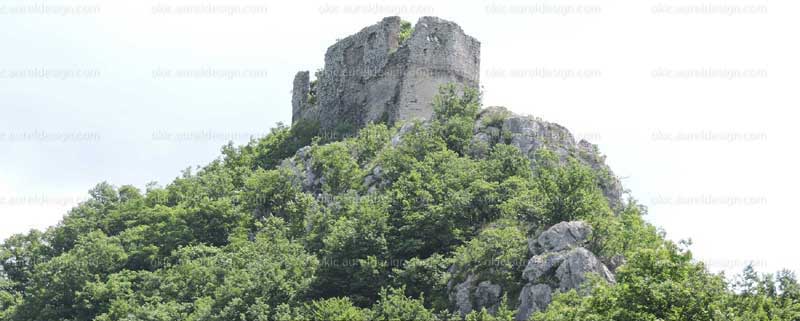
I was bound to that region by nature as well. From childhood I had loved nature in all its changes, manifestations and forms. I loved the landscapes of my native land beneath Žumberak. As a child I loved to gaze at the Žumberak mountain range standing there like a great wall. I would ask myself: what lies on the other side? I loved to watch carts, motorcars and buses disappearing along the white road from my little hill, and I would dream of distant places. Little did I suspect that I would one day fly to the shores of every ocean in search of Croatians who had emigrated or been driven into exile! I loved summers and winters, springs and autumns. All of it was beautiful beneath Okić! When, as a grammar-school boy, I dreamed of my future, I wished to be a mountain priest among simple people, in beautiful countryside, with far-reaching views. I had Slavetić in mind.
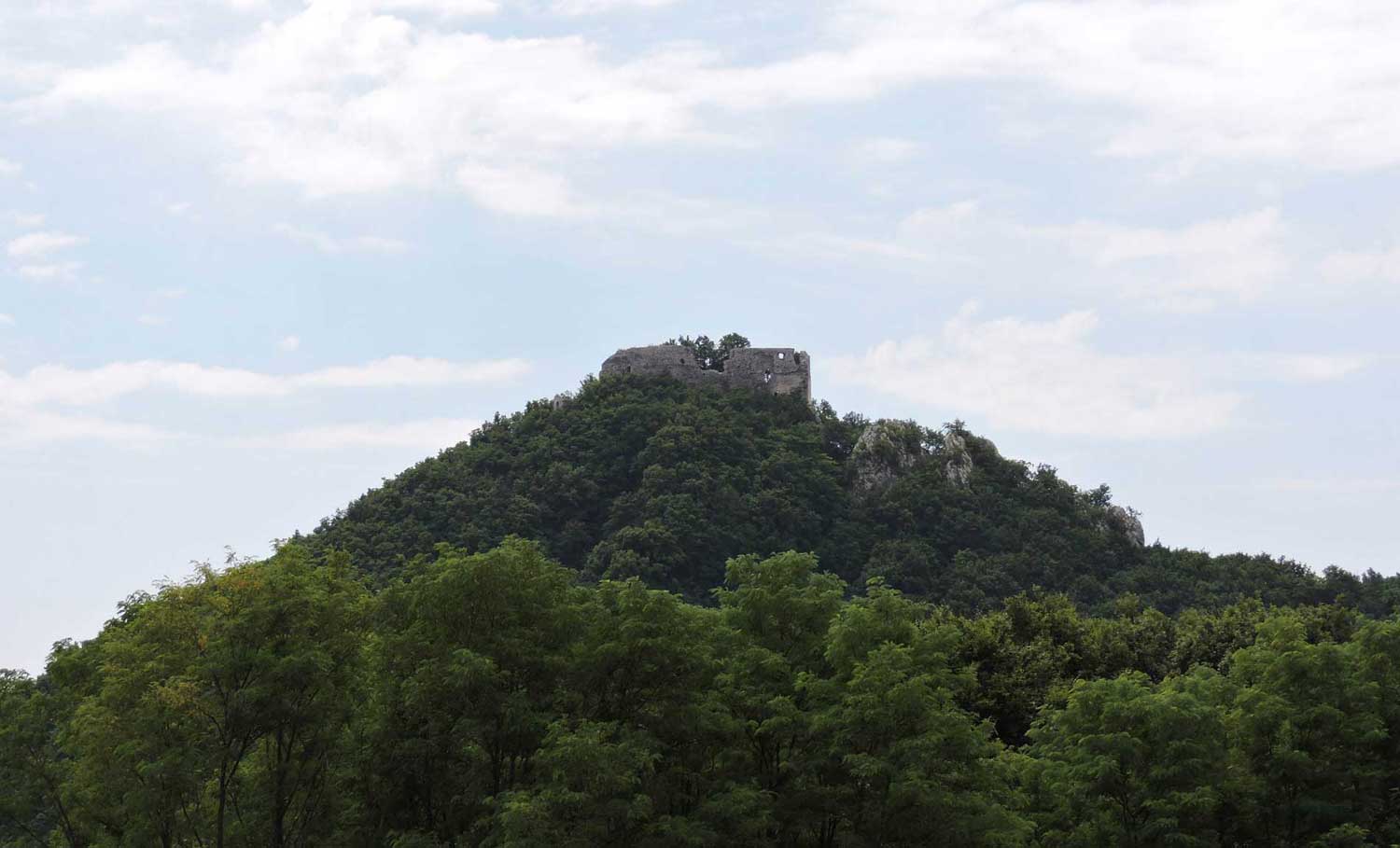
Providence placed me rather on the eastern side of those hills — dazzling in clear weather, yet menacing when they darkened in storms. Once, during a blizzard, I walked from Okićka St Marija to Konščica by way of Klake. Along the way I stopped at Okić Castle and watched the wind carrying the snow upward from the depths below. In every kind of weather and every storm I discovered something interesting, and even in the gales something movingly "beautiful". There was plenty of that in Okić! I left the Okić area carrying indelible memories, for I had after all lived there through eleven full years of my young priesthood. How could I not treasure those beautiful years!
A militiaman in Rakov Potok, shortly after I arrived in the parish, said to me during a conversation on the road: "Priest, I'd love to grab you by the legs and smash you against a wall." — I said: "That would be perfectly in keeping with the Constitution!" — He said: "Who will be praying to you in twenty-five years?" I said: "Even more people than now!" He was convinced that faith would disappear from among the people and that the Church would die out. I thought of his prediction on 9 September 1984 in Marija Bistrica, at the celebration of the National Eucharistic Congress — the event at which Croatian believers gathered in the greatest numbers ever recorded for a Eucharistic celebration in our history. People had gone on believing and praying, despite all the efforts of the official ideology to impose unbelief.
We were summoned for questioning by the UDBA whenever they wished to charge us with something. At one such interrogation in Samobor they said to me: "According to your faith, we shall end up in a hell we don't believe in — what will that be like?" — I replied: "You will find out for yourselves, but I do not wish that upon you. We are two different worlds: we believe in God, you do not; you wish me ill, I wish you well. In that way we cannot meet." Those words were met with no further comment."
Our hope lives on faith in God, who is Love (cf. 1 Jn 4:16).