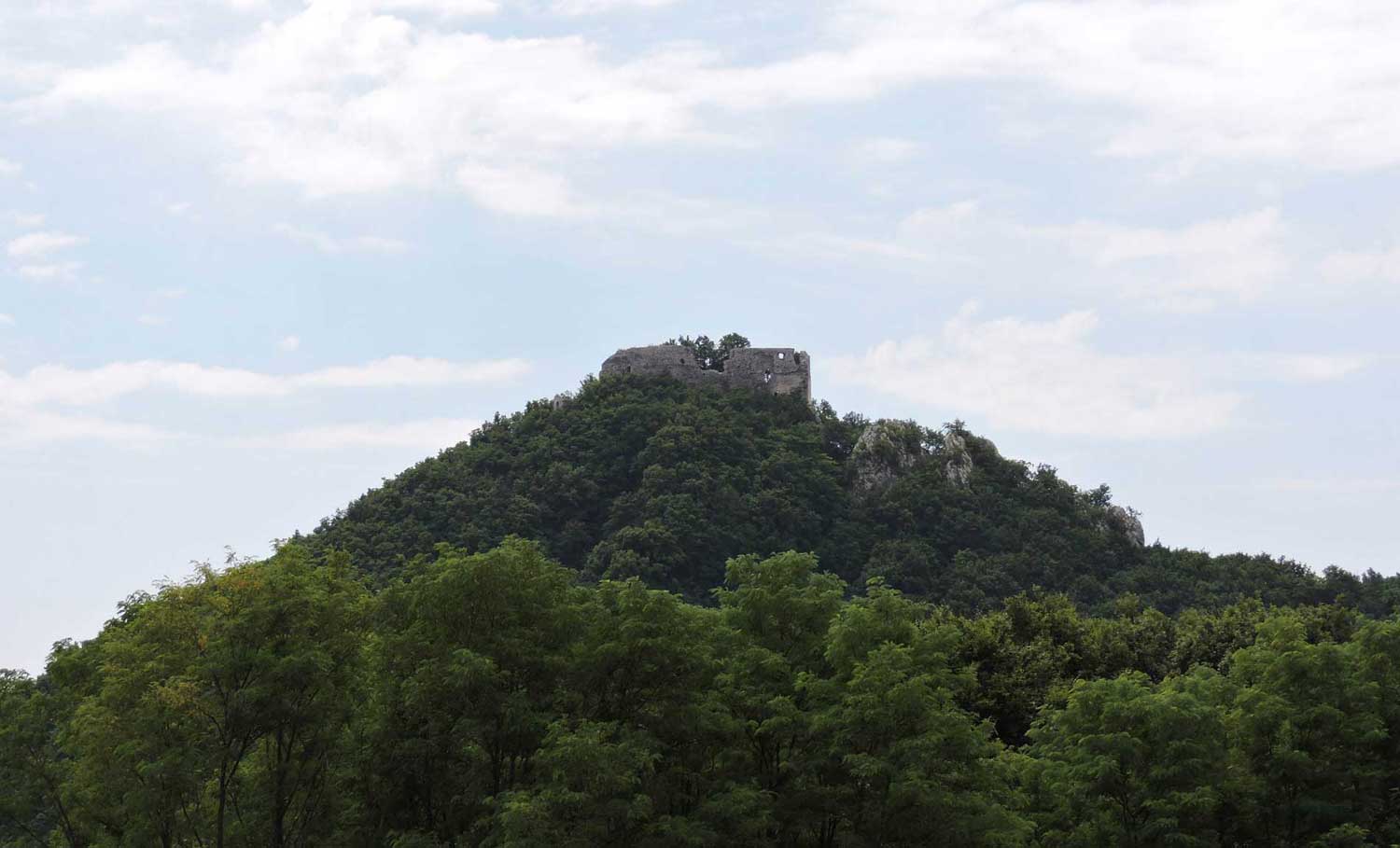
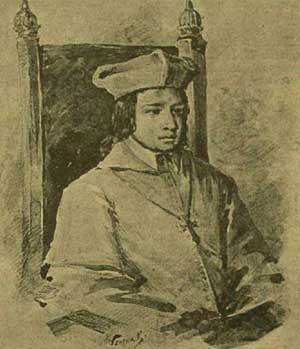
More than half a millennium ago, in 1493, the Erdödy family purchased Okić for six thousand gold florins. Acting on behalf of this great noble family was Toma Bakač, then bishop of Győr in Hungary and royal chancellor, accompanied by his brother Nikola and Nikola's sons: Petar, Valentin, Pavao, Ivan and Tobija. In this way the great and illustrious family came to Croatia, where it held immense estates in Zagorje, Prigorje and Moslavina, and ranked as the most powerful family in Croatia (and Slavonia) after the Zrinskis and the Frankopans. The deed of sale lists precisely the villages that formed part of the Okić lordship: Domagović, Cvetković, Stankovo, Beter, Repišće, Čremišišće, Pavučnjak, Klinča Sela, Terzic (now Tržić), Galgovo, Podgrađe, Tlake (now Klake), Konščica, Orešje, Molvice, Obrež and Stupnik.
The following year King Vladislav instructed the Čazma or Zagreb Chapter to formally install the Bakač family in possession. This was carried out by Master Blaž, the royal commissioner Petar Imprić of Jamnica, and Stjepan Tomašić of Korana, in the presence of nobles such as the deputy ban Ladislav of Kanjiža, Nikola Terek (Torok, meaning "the Turk"), castellan of Jastrebarsko, Mirko of Korutna, castellan of Samobor, Juraj the castellan of Susedgrad, Stjepan Berislavić, castellan of Lukavac Castle in Turopolje, and Gregor, castellan of Ozalj. These men were at once witnesses and the nearest neighbours — the "boundary-holders" — of the Okić estate. The first castellan of Okić Castle was Stjepan Tomašević, who shared both the given name and the surname of the last king of Bosnia.
There is no record of Toma Bakač having stayed at Okić in person; in his name the castle was administered by castellans, the next of whom was David Šafarić (1504). Nor is it recorded whether the aforementioned Toma Bakač — whom we might call "the Elder," since he bore the same name and surname as the hero of Sisak and victor Toma Bakač Erdödy, but lived roughly a century earlier — left his estates to his kinsmen or nephews. Only in 1517, after he had arranged and fortified the episcopal town of Zagreb (Kaptol), did he bequeath by testament his numerous properties to his nephew Petar, the son of Nikola. These consisted chiefly of estates in what is now the Austrian Burgenland, then western Hungary, while in Croatia and Slavonia they comprised: Moslavina (now Popovača), Jelen-grad, Dijanovec, Plodin, the market town of Kutina, then Cesargrad in Zagorje and Okić in Prigorje. Should his line die out, he stipulated that these estates should pass in part to the Church and in part to the Zagreb Chapter.
Before long, the Bakač family — increasingly known in Croatia as the Erdödy — enlarged their holdings and encircled Okić with Jastrebarsko to the south-west and Lipovec to the west, becoming yet more distinguished and assuming the title: free lords of Cesargrad, Okić, Lipovec and Jastrebarsko. In 1557 Petar, son of the Petar already mentioned, became ban of Croatia. In his dealings with other feudal lords Petar was not particularly peaceable, but towards his own subjects he showed generosity: in 1546, for instance, he granted Juraj Stričković and his wife Jelena the management of Konšćica, a village on the Okić estate, and made monetary contributions as well; he helped Count Stumberg financially to ransom his daughter Ana from captivity for 480 florins, and when that proved insufficient, added a horse worth fifty florins at the time and pledged the estate of Kerestinec in the Molvica district.
This Petar, the second of the Erdödys in the line, had no male heirs, and so in the absence of male issue he left everything, including Okić, to his only daughter Ana, whom we might call Ana of Okić. He too was fond of staying at Okić, from where he could survey all his estates as far as the River Kupa. It was there, at Okić in 1557, that he concluded a special agreement with the Zagreb chapter concerning the tithes of Okić, Jastrebarsko and Kravarsko. Petar II Erdödy distinguished himself, as did many of the Zrinskis and Frankopans, in defending the "remnants" of Croatia against ever more frequent Turkish incursions, and in recognition of this he received a confirmatory charter for the estates of Okić, Lipovec, Jastrebarsko, Želin, Cesargrad, Novigrad and Hrastilnica on the Sava near Sisak. At the same time, the Zagreb chapter was instructed to install him formally in possession — as was customary at the time, since the chapters kept the documents and seals with which they authenticated transfers of land and other changes of ownership.
In the second half of the 16th century this region, like much of Croatia, was swept by the movement for conversion to a new faith — Protestantism, which was spreading from Austria and Hungary and had originated in Germany after Martin Luther laid down his principles, directed chiefly against the Pope, the collection of money and certain weaknesses that had manifested themselves within Catholicism. One of the adherents of this new religious teaching was Petar II Erdödy, who willingly listened to the ardent Protestant preacher Grgur Vlahović from Ribnik near Karlovac. It is recorded that in 1563 Vlahović preached somewhere in the area below Okić, and that his audience included Petar, the Zagreb bishop Matija Bruman and several other noblemen. The Protestant movement, also known as the Reformation, found no deep roots in north-western Croatia, and it had almost entirely disappeared once the Catholic Church and the states that remained loyal to it set in motion the so-called Counter-Reformation.
In 1560, Petar II Erdödy purchased the Kerestinec estate in the fertile valley not far from the Sava river and Zagreb, buying it from one Petar Herešinec. From that point on, the family ceased to carry out repairs on the hard-to-reach Okić Castle. His son, Petar III, known as a military commander in the wars against the Ottomans and as the Uskok captain of Žumberak, began constructing a new lowland fortress on the Kerestinec estate in 1575, protected by ramparts and water obstacles. From then on, the Erdödy family spent more and more time at this new seat, maintaining their chancellery there and issuing their documents sealed with their own stamp and coat of arms.
In the second half of the 16th century, the Croatian people's desperate struggle for survival — for existence itself — began in earnest, as Turkish raiding parties frequently crossed the Una, the Kupa and even the Sava, appearing on the very outskirts of Zagreb. The eastern parts of Croatia (Slavonia) and the south-western parts (Dalmatia), together with their most important towns such as Požega and Klis, were already in Turkish hands, while their auxiliary hordes — Vlachs and martolos — plundered, killed and drove ever greater numbers of the population into slavery. A general flight northwards and westwards then began, towards the Slovenian lands, the Austrian provinces, western Hungary, Moravia and present-day Slovakia, where their descendants live to this day as the Burgenland Croats. When Kostajnica fell in the Una valley in 1556, only Bihać remained in Croatian hands; and from the south came great numbers of refugees — Croats, whom the Kajkavian-speaking population called Horvati — who settled existing villages or founded new ones, such as Horvati near Rakov Potok, and Horvati near Zagreb, of which today only Horvaćanska cesta survives as a name.
Petar II also welcomed refugees fleeing the threatened or occupied parts of Croatia — much as people do today — and settled newcomers from the Una region, probably from the area around Bihać, in the lowland part of the Okić estate, on the site of present-day Zdenčina, which was then a marshy tract of oak woodland. These settlers were known at the time as Bišćani. The aforementioned Laszowski writes of this: "In the year 1562 there came to Ban Petar Erdödy 'Croatian newcomers' — Juraj Simanović, Martin Malčić, Ivan Juratović and many others — driven from their own hearths by the Turkish misfortune, and they besought him for aid. By a charter written on the 26th of October 1562 in the castle of Okić he settled them permanently in the wooded place of Zdenčina, granting them the right to clear the forest with exemption from all dues for three years, after which time they were to render to the estate yearly three plough-services on two days a week during the sowing season, together with the tithe and dues like other serfs. As the settlement charter relates, the nobles Juraj, Petar, Nikola and Juraj the Elder Simanović were the first arrivals from Bosnia (from Bihać) to come to Ban Petar Erdödy, who received them. Thereafter they returned to Bosnia, whence they brought back with them 'a hundred households of Croatians … who had fled from the Turkish force out of Bihać and come into our lands by torchlight and starlight.'"
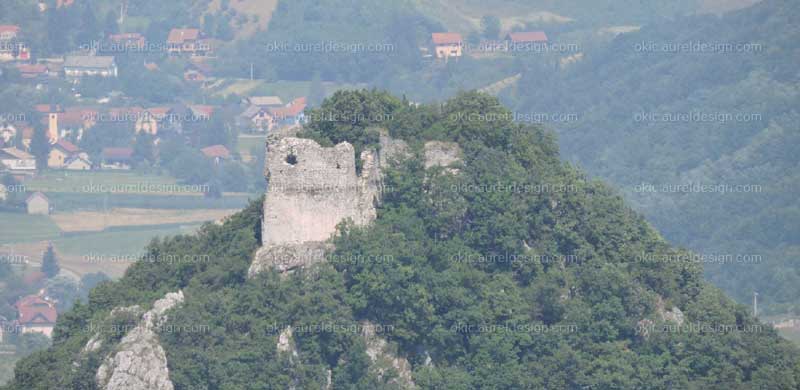
And while Petar was generous towards refugees from the southern parts of Croatia, he was perpetually at odds with his local neighbouring lords over forests, boundaries and vineyards — most notably with the people of Stupnik, whose woodlands he plundered and from whom he seized the vineyards below Okić, though he was eventually compelled to return them. It is worth noting that the inhabitants of Zdenčina still keep their vineyards today above Repišće, below Gonjeva, and that almost all of them form a single unbroken holding. We do not yet know, however, how or when the people of Zdenčina — known to the folk of Okić as Zdenčaki — came into possession of those vineyards in one of the most beautiful situations in the area, at an elevation of roughly 250 to 300 metres, where the mists are lightest and the aspect is sunny, facing the warm south.
After Petar's death in 1567, the Okić estate was managed by his wife Barbara, née Alapić, who was probably the sister of Gašpar "Gaša" Alapić — the figure depicted by August Šenoa in his novel The Peasant Revolt. Documents from that period describe Barbara as an exceedingly violent woman, comparable in character to her contemporary Franjo Tahi. She is said to have been an insufferable oppressor of her many serfs, demanding excessive and impossible dues. The administrators of her castles — the castellans of Okić and Jastrebarsko — inflicted great wrongs and injustices upon their subjects, both the unfree serfs and the petty free nobles, the single-village smallholders we have already referred to as the plum-growers. Her sons Petar III and Tomaš treated those under them in much the same way, and it is little wonder, therefore, that the people of Okić joined the ranks of Matija Gubec, Ilija Gregorić, Mogaić and the other leaders of the Stubica "men's uprising" — the revolt we commonly call the Croatian-Slovenian Peasant Revolt of 1573.
The rebellion spread from Stubica through Susedgrad and Okić, engulfing all the serf villages as far as beyond Jastrebarsko. In this region it was crushed in blood by the aforementioned Gašpar Alapić, sub-ban of Croatia, with the cavalry of Prince Nikola Zrinski; the records state that some 800 peasant serfs were killed there. The people preserved the memory of that defeat in their oral tradition — the memory of the revolt, of the good peasant king Matijaš, whom they linked in their stories with the struggles for their "rights" and with the age of King Matijaš whom we have already mentioned earlier.