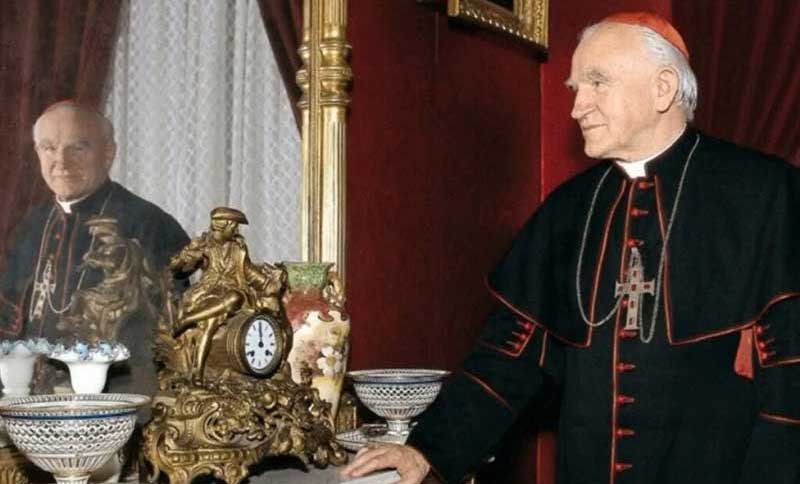
Cardinal Franjo Kuharić was born on 15 April 1919 in Gornji Pribić, a subsidiary settlement of the parish of Pribić near Krašić, to his parents Ivan and Ana, née Blažić. He was their thirteenth and youngest child. He passed his school-leaving examination on 10 June 1939 as a pupil of the Archdiocesan Boys' Seminary at Šalata in Zagreb, at the Archdiocesan Classical Gymnasium. He went on to study theology at the Catholic Faculty of Theology of the University of Zagreb, where he graduated in 1945. He was ordained a priest on 15 July 1945 by Archbishop Alojzije Stepinac — at a time when the Croatian people were living through their own Calvary, their "Way of the Cross", their "death marches" from Bleiburg to the Romanian border, what Cardinal Stepinac called a "blood-bath" when addressing his ordinands. He celebrated his First Mass in his home parish of Pribić on 19 August 1945. He served as a curate in the parish of Radoboj in Hrvatsko Zagorje from 1 November 1945 to 31 August 1946, after which he was appointed by decree of Archbishop Stepinac as administrator of the parishes of Rakov Potok and Pavučnjak.
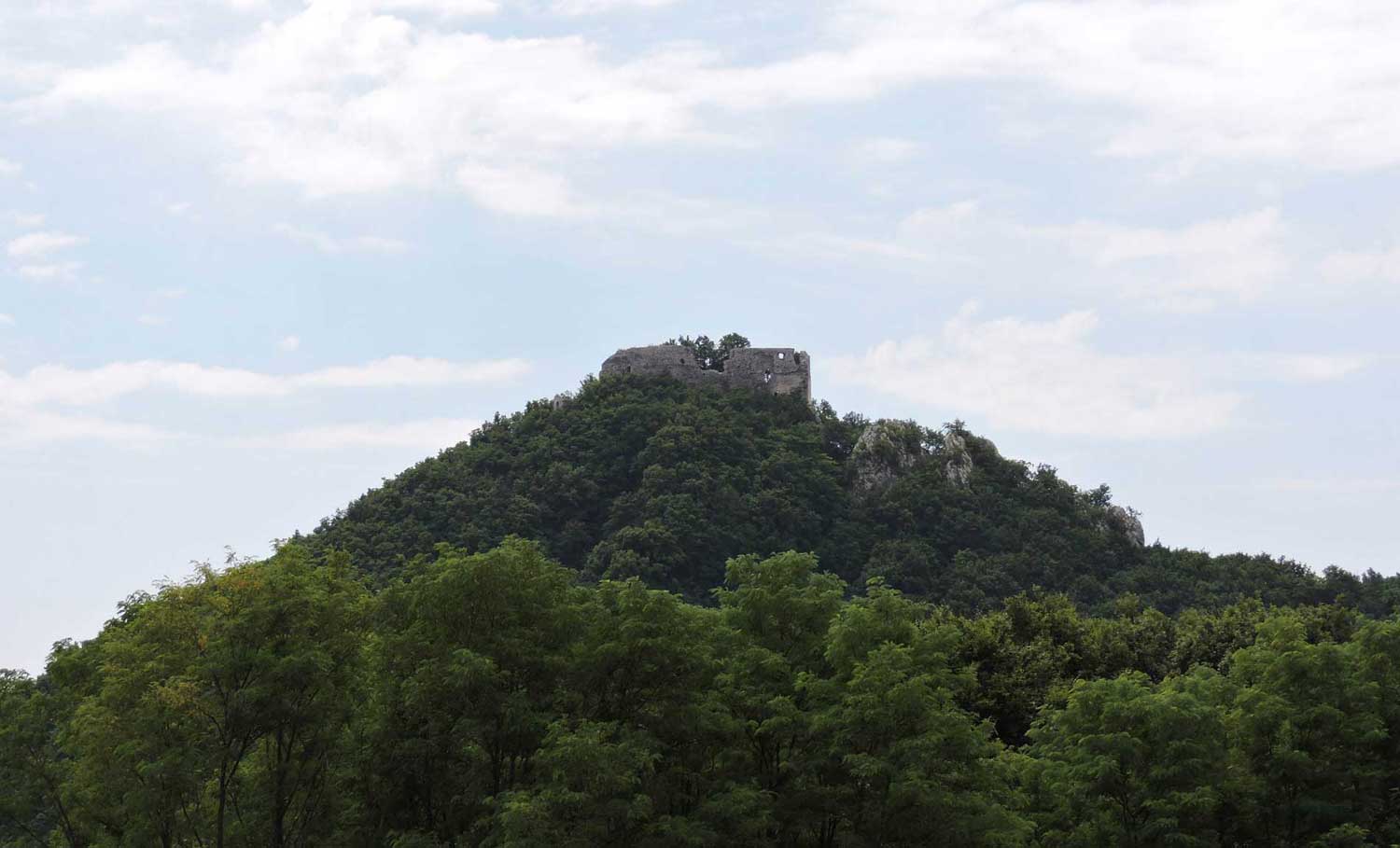
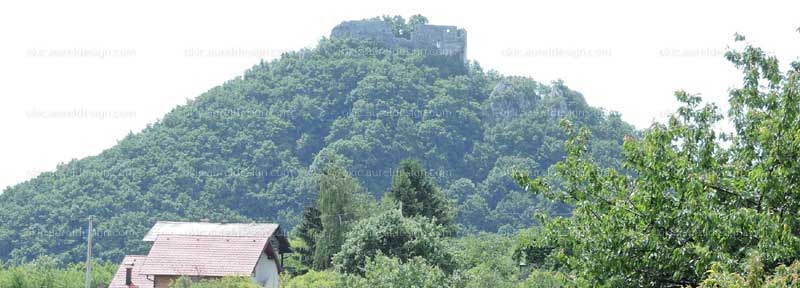
He arrived in the parish of Rakov Potok on 1 September 1946. As the parish priest of the neighbouring parish of St Martin beneath Okić, Pavao Bedenik, had been killed on 12 September of that same year, Franjo Kuharić was also entrusted with the administration of that parish, which he managed from Rakov Potok. It was by God's Providence alone that he escaped an assassination attempt on 22 February 1947, planned by the communist authorities and very nearly carried out — foiled only because Kuharić had departed from his usual routine and, instead of going to St Martin on Sunday, went there on Saturday afternoon.
During the period of the most savage persecution of priests, in order to remain among his faithful, he slept at night in private houses until he settled with the Razum family, where he stayed until 1955. Following the attack in 1950 on Lovro Galić, parish priest of Okićka Sveta Marija, Franjo Kuharić also administered that parish for about two years. In the autumn of 1957 Kuharić was transferred from the parish of St Martin beneath Okić to Samobor, initially as subsidiary priest and administrator of the parish of Rude, and after the retirement of the Samobor parish priest Stjepan Kolander he was appointed parish priest of Samobor, where he remained until his appointment as auxiliary bishop of Zagreb and titular bishop of Meta, by bull of Pope Paul IV dated 16 February 1964. He was consecrated bishop in Zagreb Cathedral on 3 May 1964 by Archbishop Franjo Šeper, together with the auxiliary bishop of Zagreb Josip Lach and the bishop of Poreč-Pula Dragutin Nežić, and was immediately appointed editor-in-chief of the Catholic fortnightly Glas Koncila.
Following the departure of Cardinal Franjo Šeper for Rome on 20 August 1969, Franjo Kuharić was appointed apostolic administrator of the Archdiocese of Zagreb, and by a bull of Pope Paul VI dated 16 June 1970 he was appointed Archbishop of Zagreb. From the autumn of that same year he was elected president of the Bishops' Conference of the then Yugoslavia for a five-year term, and was re-elected to that office three further times in succession. At the consistory of 2 February 1983, Pope John Paul II appointed him a cardinal, and he served as a member of the Congregation for the Clergy, the Congregation for Divine Worship, and the Roman Commission of Saints Cyril and Methodius.
Franjo Kuharić consistently stood up in defence of the faith and of individual rights, insisting on justice and fundamental principles both during the communist era and throughout the Homeland War. His work contributed to the realisation of the centuries-old dream of the Croatian people to have an independent state, and when that young state came under aggression he was a tireless advocate of justice, forgiveness, reconciliation and all ethical values — a commitment gathered together in the collection of his sermons, pastoral letters, messages and appeals entitled Mir je djelo pravde ("Peace is the work of justice"). Remaining steadfastly anchored in the principles of faith, Cardinal Franjo Kuharić defended Croatia's right to independence while also speaking out with the utmost openness in defence of the oppressed, emphasising Christian principles of justice and love.
During his twenty-five years as archbishop he witnessed the establishment of an independent and internationally recognised Croatian state, became the first president of the first Croatian Bishops' Conference, and had the honour of being the first senior Croatian church dignitary to welcome a Roman pontiff — Pope John Paul II — on Croatian soil, on the occasion of the Pope's first visit to Croatia. As Archbishop of Zagreb he founded as many as sixty new parishes, particularly in urban areas. He cultivated in a particular way the Christian virtue of patriotism and was a champion of the dignity of the Croatian people — a man whom the Party had declared Public Enemy Number One.
As shepherd of Croatia's largest archdiocese he was a tireless and eagerly heard preacher; some of his sermons were published in the volumes Hodajmo u istini and Hodajmo u istini II, and he was also the author of Lenten and Easter pastoral letters gathered in the book Korizmeno-uskrsne poslanice kardinala Franje Kuharića.
In his struggle for religious freedom and Croatian national dignity he was the animating spirit behind the years-long church celebration "Thirteen Centuries of Christianity among the Croats", which culminated in the National Eucharistic Congress of 1984 at Marija Bistrica. He held a profound love for Croatian emigrants and tirelessly visited them in countries and on continents throughout the world, thus fostering the unity of Croatia at home and in the diaspora.
He held particularly close to his heart the truth concerning Blessed Cardinal Alojzije Stepinac, and bore courageous and steadfast witness to it, especially on the feast of Stepinac; those sermons are gathered in the volume Poruke sa Stepinčeva groba. A date of singular importance in the life of Cardinal Franjo Kuharić was certainly 3 October 1998, when Pope John Paul II, at a solemn Eucharistic celebration at the Shrine of Our Lady of Bistrica, declared blessed his own ordaining bishop and witness to the faith, Cardinal Alojzije Stepinac.
After the collapse of the "Croatian Spring", when many Croatian patriots were sent to prison and the Church and Cardinal Stepinac came under attack, no one dared raise their voice as Cardinal Kuharić did. Every year on 10 February his voice rang through the packed Zagreb Cathedral like the trumpet of Jericho, defending the truth about the Servant of God Alojzije Stepinac. We may say with confidence that we would not have Blessed Alojzije Stepinac on the altar had we not had the courageous Archbishop of Zagreb, Cardinal Franjo Kuharić. In him we experienced God's closeness; he carried in his heart the exiled and suffering Croatia, and his words were a balm for the wounded Croatian soul. We saw how he rejoiced in Croatian freedom and how Croatia's wounds pained him. Cardinal Kuharić was a man of God, and that can be confirmed by everyone who knew him.
After the democratic changes, when the media became accessible to him, he gave well over a hundred interviews to domestic and foreign outlets, and a selection of those conversations was published in the book Principi dobra. From the moment the Holy See established the Croatian Bishops' Conference on 15 May 1993, he was its first president, elected on 8 June 1993, and he held that office until his retirement on 5 July 1997, handing over the office of Archbishop of Zagreb to his successor, Mons. Josip Bozanić, on 4 October 1997. Since 1994 he has been an honorary member of the Croatian Academy of Sciences and Arts.
Even after his retirement in 1997 he remained active in the apostolic and pastoral work of the Church of Zagreb, and especially as a contributor to the social communications media; he was a particularly frequent guest on radio programmes, and his participation in the broadcast Hvaljen Isus i Marija on Radio Sljeme gave rise to a trilogy, the first volume of which has so far been published under the title Zakon života i slobode.
Cardinal Kuharić was a man of faith, hope and love. Cardinal Kuharić was a man of faith, but also of trust in the future. This was evident in his public appearances and was plainly heard and understood from his words. Faith in God as the creator of the world and of history gave him the moral and human strength to endure both persecution and difficult times, and to bear witness to people that faith is the power that overcomes every evil and dispels every mistrust of the future and every danger facing man, the homeland and the world. Love of God is, after all, always also love of one's fellow man.
Cardinal Kuharić was a man of hope. There was once a word — ufanje — but it grew ever emptier as the circumstances of the Croatian people grew ever more difficult, and hope grew ever more scarce. Hope does not live from the past, still less from history. It is turned towards the future, both on earth and in heaven. Only a person of deep faith can be fully filled with hope — hope in spite of everything. Hope against all hope! How blessed we are, together with Cardinal Kuharić, to have witnessed the fulfilment of so many hopes; yet from the fulfilment of great hopes new demands are born — many new obligations for individuals, for society, for the Church and for the state. The scriptural word is that the righteous person lives by hope. By reason of the justice he lives and bears witness to with his life, hope opens up as a natural gift, as a natural good.
Cardinal Franjo Kuharić was a man of heroic Christian love. That love found its source and its justification in faith, and this could readily be discerned from his actions and words. The hierarchy of love was equally clear: love of God first, then of the Catholic Church, then of every human person, and finally — though by no means last — of the homeland. Any other order would have been a betrayal of the faith as Cardinal Kuharić understood and embraced it. Love is an individual, personal quality; it is a conversation between person and person, and less so between a person and institutions. Love for the human being — for every human being as an individual and a person — Cardinal Kuharić insisted, can heal society and help it find its saving path out of the snares of politics, globalisation, alienation and individual and collective misfortune.
Cardinal Franjo Kuharić fell peacefully asleep in the Lord on 11 March 2002. Although during his lifetime some of his actions were contested and some of his words weighed heavily on the consciences of politicians, at the moment of his death it became clear that, for the great majority of Croatians, he had always been right. The funeral procession around his coffin showed how much more than others he had been a guiding sign in this age of self-questioning, scepticism and uncertainty on the road towards an insecure future — haunted by the spectre of global uniformity, by the threat to national identity, and by the danger of the impoverishment of small nations in the fields of economics, culture and education alike. Amid the highest ecclesiastical honours, in the presence of numerous senior church dignitaries, the heads of state, government and parliament, and a countless multitude of Christian faithful, he was laid to rest in Zagreb Cathedral beside his predecessors: the blessed Cardinal Alojzije Stepinac and Cardinal Franjo Šeper. One of his associates put it precisely: everyone admired Stepinac, everyone respected Šeper, everyone loved Kuharić. On the same date, ten years later, the process for his beatification was formally opened.