
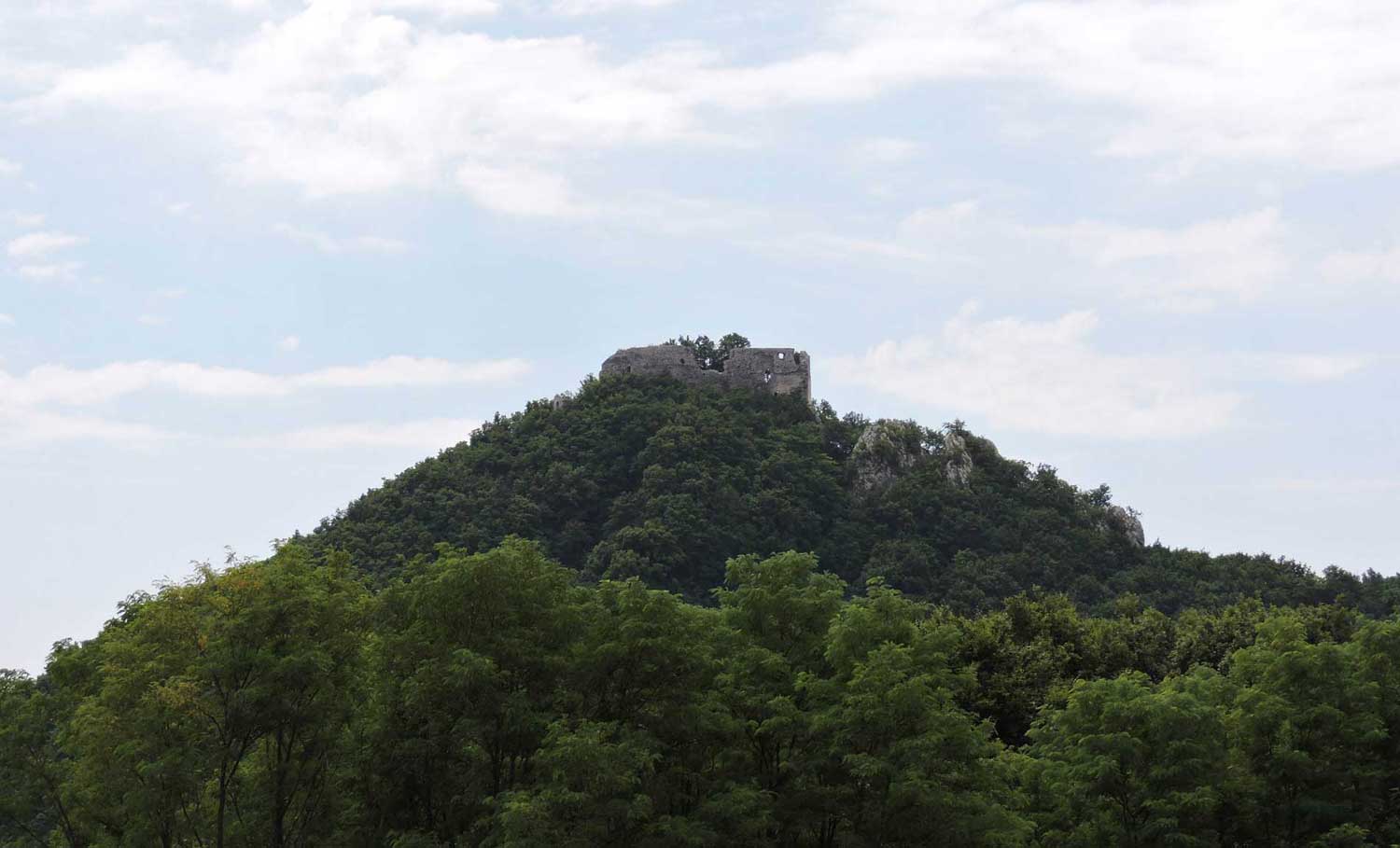
The gentle Okić area lies in the southeasternmost part of the Samobor Hills. These hills occupy a particularly significant biogeographical position, as it is here that both the Dinaric Alps and the Alps themselves reach the Pannonian Plain at the same point. Not far from Okić, the middle Sava valley extends to the southeast, while the southern part of the old Okić parish also takes in a portion of the Kupa basin. Across the eastern part of the Okić area — through Pavučnjak, Horvati and Kraljevec forrest — the Samobor Hills connect with the Vukomeričke Gorice, which divide the middle Sava valley from the River Kupa and its tributaries. This geographical position, combined with a varied geological base, is the reason for an exceptionally diverse flora and fauna.
The upland forest belt of Plešivica descends gently eastward and southward through a hilly landscape threaded with numerous streams, down to the lowland flood-plain forests of Okićki Lug. Natural forest vegetation has been preserved only in part; the greater portion of the slopes below Plešivica and Okić has been converted into vineyards and orchards, while the lower ground has given way to arable fields and meadows. Numerous villages and hamlets have made their home here, yet there remains sufficient woodland to preserve a large part of the flora and fauna that existed in this area before human settlement. Nature has in fact been enriched by species that live outside the forest, and it is well known, for instance, that birdlife is more abundant in areas with many small copses than in dense, uniform woodland.
Every region is given a special character by its endemic species — rare forms whose distribution is confined to a single, relatively small geographical area. Specific combinations of plants and animals, that is, their communities, can also be endemic. The Okić area is too small to have endemics of its own, but it is home to certain endemic taxa and communities that are characteristic of a somewhat broader geographical territory. These deserve particular protection, for they lend a region its distinctiveness, much as traditional costume, architecture and customs do.
The plant life of the Samobor Hills, and of the Okić area in particular, has played a special role in the study of Croatia's flora. In the mid-19th century, distinguished Croatian scholars made pilgrimages here — among them Josip Schlosser-Klekovski and Ljudevit Farkaš-Vukotinović, who diligently collected plants for their Syllabus florae croaticae (1857) and later for the first monograph Flora croatica (1869). Okić held a particular attraction for the celebrated plant collector Ljudevit Rossi, who discovered many rare species there. The botanist Ljerka Bevilaqua also studied the vegetation here (1959), and Ivan Šugar defended his doctoral dissertation on the flora and vegetation of the Samobor Hills in 1972. He compiled data on a total of over 890 plant species, confirming the extraordinary botanical richness of this area.
The animal life of the area has been far less thoroughly investigated, particularly among invertebrates. What lies hidden in the collections of the many insect collectors is still unknown, and no comprehensive survey has certainly been carried out. Birds have been studied most systematically, by ornithologists Dragutin and Renata Rucner, whose findings were partially published in a paper on the birds of the Samobor Hills in 1975. The mammals of Crna Mlaka were studied by Nina de Luca in 1984, and the birdlife there has attracted not only numerous Croatian ornithologists but also members of the Zoological Society of Frankfurt. That society has contributed greatly to the protection of the special ornithological reserve that the Republic's Nature Conservation Institute designated in 1978, covering 625 hectares of the Crna Mlaka fishponds and adjacent woodland.
This brief selection of the flora and fauna of the Okić area currently known to science — presented on these pages — is far from exhaustive, yet it sketches the wealth of diverse life forms found here. At this crossroads of the Alpine, Central European, Dinaric and Pannonian biogeographical regions, ecologically dissimilar plant and animal species have found their home almost side by side. Every spring and autumn, birds and bats migrate along the southern slopes of Plešivica and Okić, following the very routes along which entire floras and faunas moved in ages past.