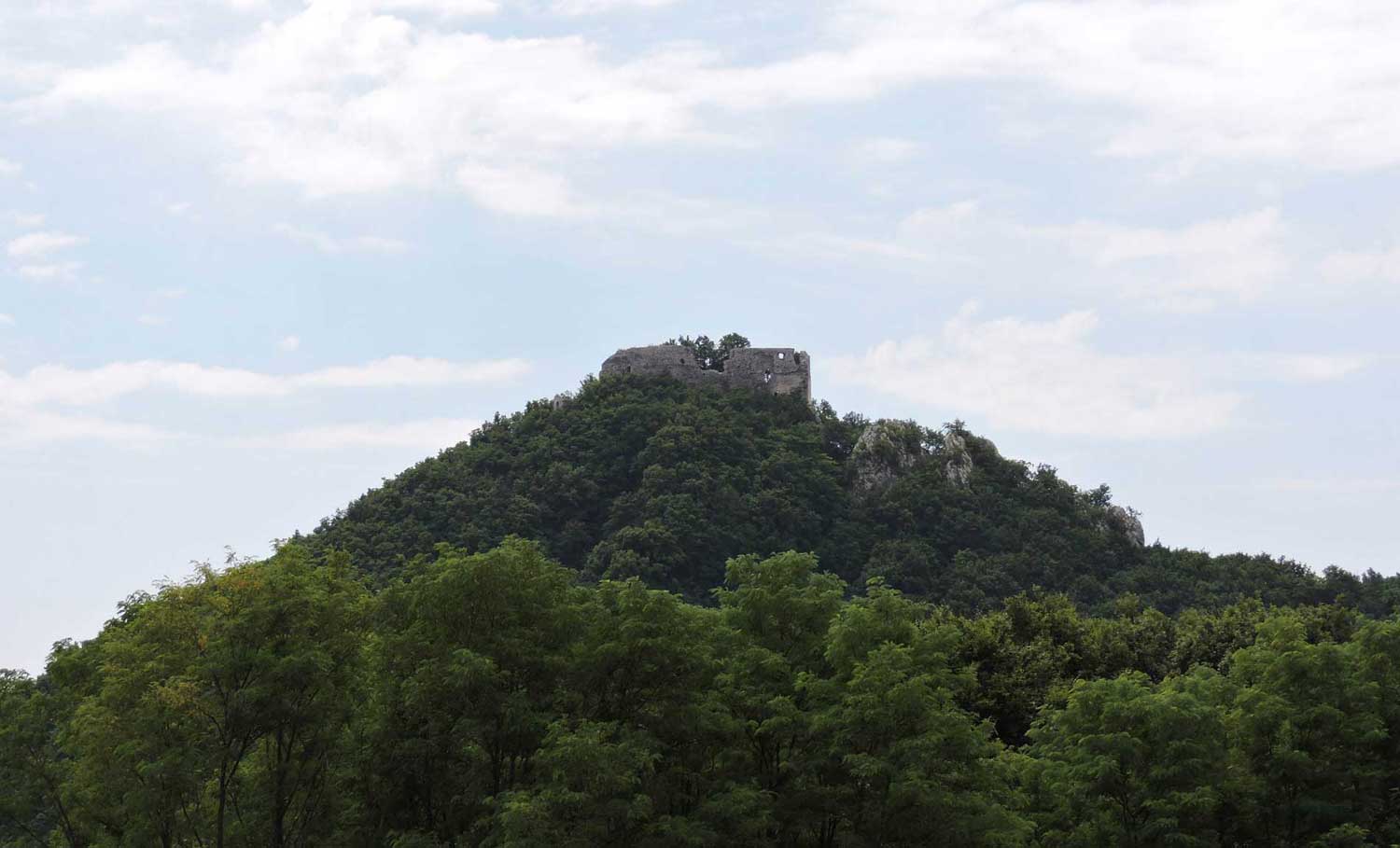
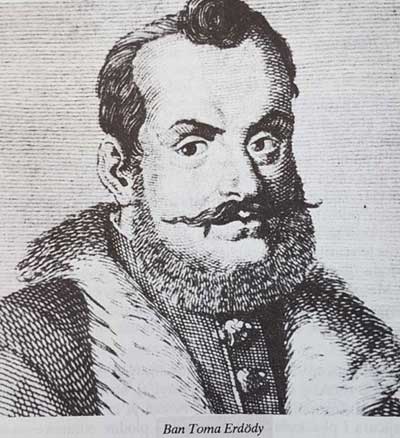
Just as it had withstood the Tartar onslaught in earlier times, Okić also held out against the Turks at the close of the 16th century, when its lord Toma (Tomaš) Bakač Erdödy won the greatest and most glorious victory over the Turks and their bloodthirsty Vlach auxiliaries at Sisak in 1593 — a triumph that astonished all of Europe and rang with praise for "the mighty Bakač-Ban." Even in our most recent Homeland War, on Croatia's frontier, along the final line of defence on the Kupa, the descendants of those same Vlachs who had helped the turncoat Hasan-Pasha Predojević reduce Croatia to "the remnants of remnants" were once again present; yet we must remember that after the victory at Sisak came the time of "resurgent Croatia," which recovered its lost lands. By that victory, the lord of Okić and his other estates, Toma Erdödy — whose bones rest in Zagreb Cathedral and to whom the poet A. G. Matoš dedicated a fine sonnet — proclaimed the indestructibility of the Croatian people, whose Okić and whose capital Zagreb never fell under the Turkish yoke, under the sway of the Turkish crescent, even though it was precisely because of that crescent that all of Croatia itself acquired its present crescent shape.
When Hasan-Pasha first attacked Sisak in 1591, he understood that without capturing the Croatian stronghold of Bihać and establishing a Turkish bridgehead on the Kupa — that is, a new Petrinja — he would be unable to take Zagreb and plunder Turopolje and Prigorje. Having accomplished that, he advanced in 1592 with detachments of janissaries and the plundering martaloses across the fertile plain of the Odra towards Zagreb. He brought his army to the site of present-day Novi Zagreb and, looking across the swollen Sava, gazed upon the towers of St Mark's in Gradec and of the Cathedral of St Stephen the King on the episcopal see — yet he did not dare cross the river, perhaps because of the fortified city of Zagreb, strengthened by the Erdödy lords of Okić, or perhaps because of the flooded river itself. In his fury, he ordered his auxiliary troops, the martaloses, to pillage and lay waste the entire countryside south of the Sava as far as the Kupa, after which they withdrew to their Jeni Hisar — New Town — which was the new Turkish Petrinja, from which, as the Turkish travel writer E. Čelebija records, he dispatched Turkish warriors against Croatia "as a falcon is sent from its nest to hunt." Today's Petrinja was conceived with a similar purpose in mind, as a staging point for a march on Zagreb, but the new conquerors from the East found, like Hasan's men before them, their grave "in the cold Kupa."
The following year — the historic year of 1593 — the Ottomans and Vlachs once again flooded across the plains of Turopolje like a tide, reaching as far as Jastrebarsko, Okić, Samobor and Kerestinec, laying waste to the entire region and carrying off great numbers of the population into captivity. Only those who found refuge within the walls of the aforementioned fortified castles were saved. In 1595 too, when the final battles were being fought for the Ottoman-held Petrinja — which soon became the principal launching point for the liberation of Croatia — the Ottomans again broke into the Okić area, for the last time. They were met at the foot of Okić by Karlovac cavalry, soundly defeated, and fifty of them found their grave there, as invaders so often do, from the Tatars and Ottomans onwards. From that time on, the Ottoman great power began to decline and never again broke into this gentle land; those who come today do so as friends.
Dr Franjo Bučar (Zagreb, 1866–1946), literary historian and the founding figure of all sporting life in Croatia at the close of the 19th and the beginning of the 20th century, described in his journal Gimnastika an excursion from Zagreb via Zdenčina to Okić in 1897. The following is what Dr Bučar wrote, drawing on the account of the guide who led them to the Okić fortress, concerning the time when the Turks attacked Okić:
The impregnable Okić Castle could not be taken by force, so the besiegers resolved to starve it into submission. Supplies inside the castle were already running low — only three sacks of wheat and two lambs remained. The defenders slaughtered one of the lambs, skinned it, stuffed the blood-soaked hide with wheat and hurled it down among the Turks. Believing that the garrison still had ample provisions, the Turks abandoned their lengthy siege and set off towards Turopolje. There, during a rest, one of the soldiers lifted a roasted capon from its spit, challenging any bold fellow who dared to snatch it from him. At that moment a cannon shot rang out from Okić Castle, blasting both the roasted capon and the man who had issued the challenge. For the men of Turopolje this was at once the signal to attack. They fell upon the Turks, routed them, and were granted nobility as their reward.