Okić under Frankopan rule
Benvenut, son of Toma the lord of Okić, held the castle until 1416, when he sold it to Nikola of Krk — the very man who had previously, and unsuccessfully, received it from Ladislav of Naples. The agreed price was ten thousand gold pieces, but Nikola did not pay it outright; instead he gave Benvenut's sons, Toma and Ladislav, his own castle of Cetin in exchange, and they signed a declaration in Senj that the debt had been settled. From that time the Benvenut branch of the Okić family bore the title "of Cetin" (de Cetin), and later also "of Ostrožin," which they soon acquired by purchase.
In 1419 Nikola of Krk received from King Sigismund a special royal charter confirming his ownership of Okić Castle in recognition of his bravery and success in repelling the Turks from Croatia's borders. From that point Okić was officially in the hands of the Krk-Frankopan family, who at that time — and frequently thereafter — held the office of Croatian ban, making Okić one of the ban's seats of power. When Nikola died in 1434, Okić passed to his son Martin, who married Jelena of Lipovec and thus held both these strong fortresses — the twin guardians of Samobor, Jastrebarsko and the Samobor hills. Having himself distinguished himself in the fight against the Turks in the Bosnian borderlands, Martin was granted by King Albert the right to collect the kuna-fur tax (marturina) across the territories of Okić and Lipovec — a prerogative that had hitherto belonged to the crown alone. As a loyal royal supporter and magnate, Martin Frankopan rode with his cavalry to fight the Turks even on the field of Kosovo, serving in the army of the regent Janko Hunyadi — known to the people as Janko Sibinjanin — in 1448.
When the Frankopans divided their holdings among themselves at Modruš in 1449, the aforementioned Martin received Okić Castle, along with Starigrad, Novi, Senj, a share of Krk, Bribir, Trsat, Badanj and Kotor. In recognition of further services, Martin received by royal charter Kostajnica, Steničnjak (now Sjeničak), Lipovec, Skrad, Ostrvica and even Kladuša, which at that time formed an integral part of Croatia, as did the whole of the Una valley. Around the year 1470, Martin Frankopan handed back to the king his castles of Okić and Kostajnica, most probably on account of a lawsuit he was pursuing against the heirs of the oft-mentioned Benvenutas (Benvenjud), who held a document stating that Okić had been sold for fifteen, not ten, thousand gold pieces. In 1480 the king awarded the heirs the castle of Kostajnica, as it was said, "for all time," and so the dispute over Okić was settled in the Frankopans' favour. Sources record that around this time the castle's captain (castellan) at Okić was one Bernard Stručić, who seized 1,200 measures of tithe wine from the canons of the Zagreb Chapter, giving rise to a protracted lawsuit. Evidently Okić wine enjoyed a fine reputation even then, serving the canons — that is to say, the clergy — as their "altar" wine.
Before long, the celebrated King Matthias, surnamed Corvinus — of whom the common people still say to this day: "Since King Matthias has been sleeping, there is no justice to be had!" — entrusted Okić to the administration of his county prefect of the royal salt-works, Ivan Horvat of Šag, or of Beren, who through his Okić castellan Vinko Vuz seized the forests belonging to the lords of Brezovica. Ivan Horvat likewise appropriated the dues that the serfs of Stupnik owed to their Dominican monastery there. He was brought before a court for this and compelled to pay compensation. From that time, however, Stupnik is mentioned only as part of the Okić lordship.
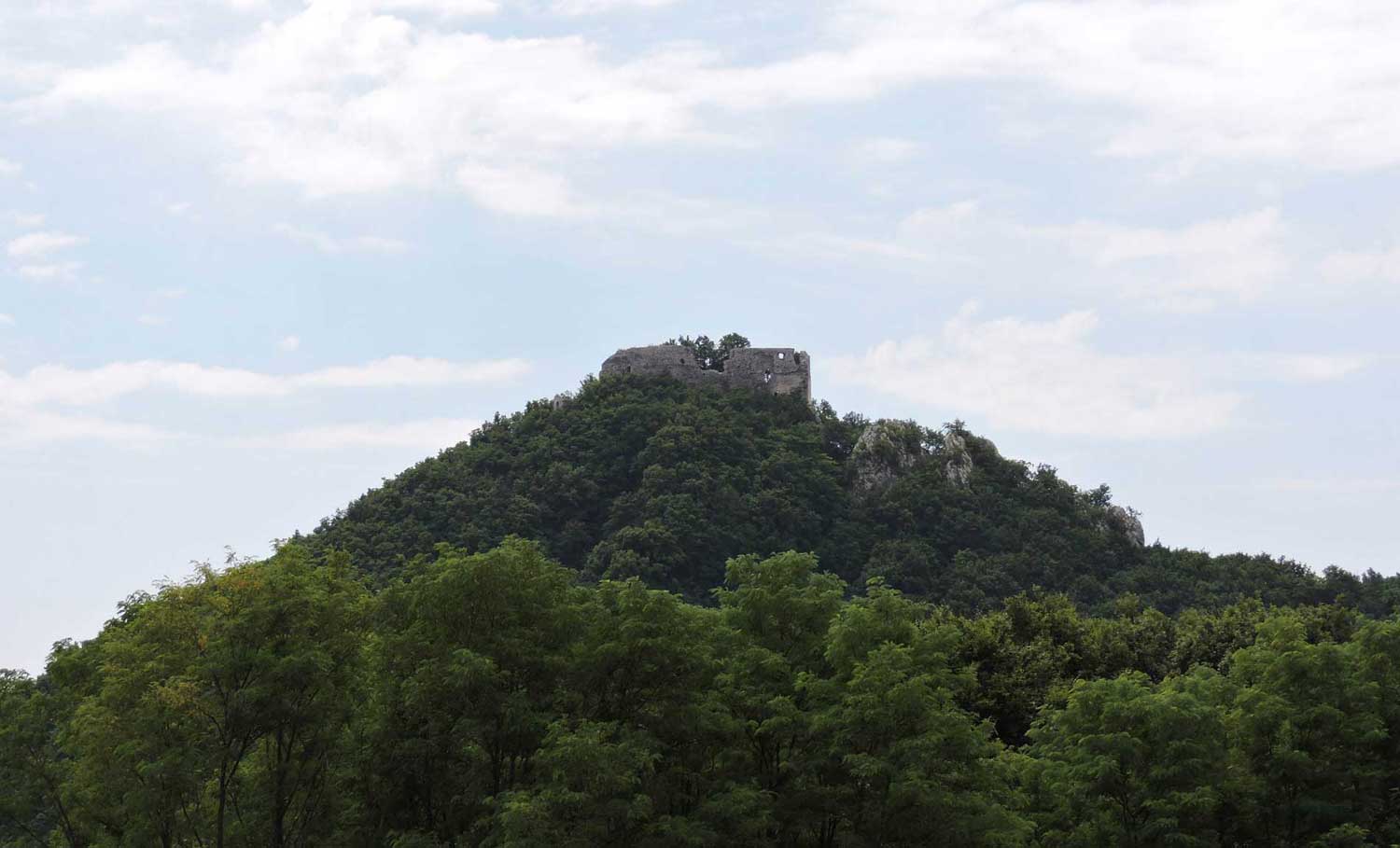
Ivan Horvat also bore the noble title of Okićki (de Okich). He was still extending and repairing the Okić fortification as late as 1492, but probably only in order to sell it shortly afterwards to its lords of many centuries, the great Hungarian magnates known as the Bakač family (Bakacs), called among us Erdödy (Erdedi). More about them in a dedicated chapter on these pages.