
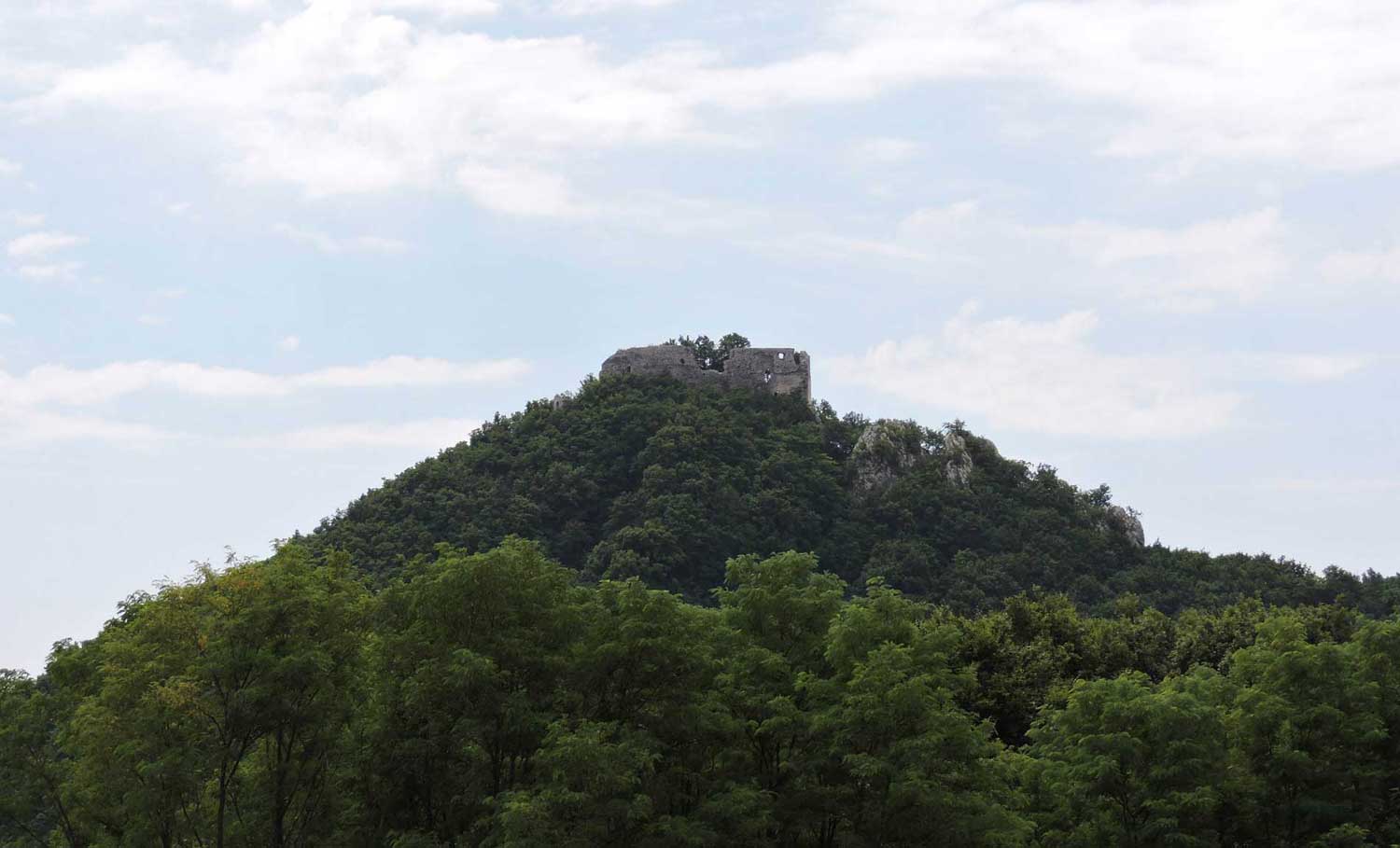
Viticulture in the Okić area
According to the "Classification of Viticultural Regions in Croatia", the vineyards of the Okić area belong to the Plešivica–Okić wine-growing district within the Plešivica viticultural sub-region. It is estimated that the vineyards of the Okić area account for approximately 220 hectares, planted with the following varieties: Štajerska Belina (20%), Kraljevina (20%), Šipelj (10%), Graševina (8%), and in smaller proportions Veltlinac, Silvanac and other white varieties (15%), along with Portugizac (10%), Frankovka (6%) and Kavčina (11%) among the red varieties.
From the present day, let us now stroll back through the history of viticulture in this area.
The grapevine was most probably brought to this part of Europe by the Thracians, though it is not ruled out that many cultivated vine varieties originated in the region between the Sava and Kupa rivers. What is certain is that vines were already being cultivated on the southern slopes of Medvednica before the Romans arrived — that is, as far back as the Illyrian and Celtic periods. The Romans extended the vineyards and promoted the culture of vine-growing and wine-drinking. According to numerous sources, it was here that the Croats encountered the grapevine and adopted the traditions of its cultivation, care and use.
Okić is first mentioned in 1193, in a charter of Bishop Kalan. By the 13th century, the ancient Croatian Podgorje County had been established in the Plešivica area, with its seat — known as "Turanj" — situated near present-day Sveta Jana. The county's brotherhoods elected a župan to whom they owed military service and were obliged to work the vineyards, yet on their own holdings they were largely free until 1293, when King Andrew III granted the county to the noble family of the Babonići. From that point, formerly free peasants became serfs, bound to pay various dues in kind and in cash and to labour on the lord's vineyards. Sources from the 13th century attest that the vine was planted wherever natural conditions permitted, and that entire hillsides were given over to viticulture. It is in this period that Jastrebarsko appears in written records for the first time, in the charters of Ban Stjepan in 1249, as "terra Jastrabicza" — the land of Jastrebarsko. This was also the era in which Dionizije Okićki became "ban of all Slavonia" (1274).
During the 14th and 15th centuries, serfs on the estates of Podgorje county bore a "collective burden". In addition to the tithe, they were required to "hoe two vineyards twice, prune them, transport the wine, and produce 120 vine stakes apiece". Surviving tithe registers show that by the 15th century viticulture was well developed across all the estates and properties between the Sava and Kupa (Samobor, Okić, Želin, Jastrebarsko, Turopolje). According to one such register from 1459, 53 subjects of the Samobor estate paid 53.5 vedars of wine tithe and 23.5 cups of millet. On the Okić estates too, almost all the peasants worked vineyards.
In 1593 the Ottomans laid waste to Turopolje and part of the Okić estate. The entire area had previously been well populated. The Okić estate recovered quickly: by 1598 it had 295 subjects, and by 1600 as many as 357. The principal wine due was the gornica — levied according to the size of the vineyard — though the wine tithe remained the most valuable levy of all. It is recorded, for instance, that in 1605 the tithe yielded 1,221 vedars of wine, representing 53.38% of total estate revenues. That same year, 830 vedars of wine were collected as gornica, bringing the total value of the Cultellus Podgorja (the Podgorje district) to 1,640 forints — a figure that speaks for itself when one considers that the lord's cash rent amounted to a mere 76 forints.
The tithe district of Podgorje encompassed the estates of Okić, Jastrebarsko, Ozalj, Ribnik and Bosiljevo, while Petrovina was a chapter estate where tithes were collected separately. This was also a time of widespread unrest and revolts in which the Okić vine-growers took part. The suppression of these uprisings invariably brought further increases in levies.
In 1519 the counts Erdödy became lords of the entire region, remaining so until 1922, when the last of the line, Stjepan Erdödy, died. During the second half of the 16th century, Ban Petar Erdödy was himself engaged in the wine trade. In 1572, the widow of Ban Petar Erdödy bought up almost all the wine from the serfs on the Okić and Jastrebarsko estates, leaving them unable to pay the church tithe in kind — which the Zagreb Chapter had wished to collect as such. The Erdödys had, however, previously purchased the tithe rights on their Okić estate from the Zagreb Chapter, for in the first half of the 16th century Podgorje had ceased to exist as a unified tithe district, and tithes were henceforth collected on each estate separately.
The cruellest lord the Okić vine-growers knew at the close of the 16th century was Emerik Erdödy, who, over and above the regular dues, seized wine and grain and forbade serfs to sell wine "from May until Michaelmas" — a right he reserved exclusively for himself, as laid down by the provision on "Vinotočje" (the right of wine-pouring). This makes plain that on many estates vineyards held greater economic importance than all other agricultural produce combined. After Emerik's death the vine-growers' situation improved somewhat, a concession that the feudal lords accepted only reluctantly.
The most detailed information about viticulture in this area dates from the period of the urbarium regulation (1774 to 1780). The serf's position was eased slightly, but in viticulture things remained as they had always been, since the feudal system of exploitation drew its greatest revenues from wine dues. It is estimated that dues amounted to a quarter of the total value of the wine (the thirtieth tax, market toll and the like). The urbarium regulation created a shortage of labour on the lords' vineyards, so the feudal lords responded by increasing the serfs' labour obligations in place of dues in kind — to which the peasants reacted by refusing obedience to their lords.
During the French period (1809–1813) feudal relations remained entirely unchanged. Worth noting from the time of the French withdrawal is the "women's revolt", when women attacked the innkeepers of Juraj Erdödy in 1814 and seized their wine. The turbulent year of 1848 brought the feudal era to a close, yet vine-growers remained dissatisfied: although feudal relations and serfdom were abolished, the peasants received only the urbarial land — on long-term repayment terms (land relief) — meaning solely the arable fields and meadows, but not the so-called gorno land, that is, the vineyards, forests and pastures, for which they continued to owe gornica in wine, the wine tithe, and hand or draught labour for their use. These were gorno-činžene lands, assigned to peasants and their households by contract in perpetual usufruct, but still subject to dues. Only if a family or cooperative died out, or failed to meet its obligations, could such gorno land be reclaimed.
The greatest concentration of hill-land — that is, vineyards — was found in Prigorje and, to a lesser extent, in Zagorje. The finest hillside vineyards stretched from Zelina, through Dugo Selo, Sesvete and on to Podsused (including Zagreb's Pantovčak and Bukovec), then across to Okić and Slavetić — in other words, from Kalnik to Plešivica, along the southern slopes of Zagrebačka gora all the way to Sveta Jana and Petrovina. Part of these vineyards belonged to the Zagreb Chapter.
Throughout this entire region, where good vineyards had flourished on the southern slopes for centuries, relations between the great landowners and the serf-vintners were far from harmonious. After 1848, emancipated peasants considered themselves no longer obliged to pay either the hill-tribute or the wine tithe, and disputes — and even revolts — were frequent. Thus in 1862 a legal dispute arose between the Zagreb Chapter and its canons on one side, and the vintner-peasants of Petrovina and the slopes below Okić on the other. In some places the wine tithe was paid instead of the hill-tribute; in others, landowners demanded both. When all the obligations were totted up, the sum payable in cash amounted to more than a third of the harvest, and so the peasants rebelled and refused to pay the agreed dues without the intervention of the constabulary.
From 1863 and 1864 we have original documents concerning the dispute between the Marquis Hipolit Palavicini and his 178 vintner-tenants from Klinča Selo, who were subject to the lordship of Kerestinec. The peasants submitted a petition to the Royal Urbarial Court in Zagreb, arguing that they were not obliged to pay the wine tithe on lands known as "Beter, Repišće, Kapleščak, Križna gorica, Oštri vrh, Jalža and Lekovec," on the grounds that these belonged to the so-called "monastic tithe," which had been abolished in 1848.
The Zagreb Chapter examined its own records and archives, and established that this tithe had been collected since 1585, that it had been confirmed in 1653, and that it had been paid without interruption until April 1848, when Ban Jelačić abolished the majority of feudal obligations. The tithe had been collected in kind — that is, in wine. The last agreement governing its collection had been drawn up with Count Aleksandar Erdödy as recently as 1817.
Throughout the dispute, both sides submitted their documents, petitions and appeals, and engaged lawyers. In the end, the Urbarial Court rejected the claim brought by the people of Klinča Selo in 1862; they appealed to the Ban's Table — the higher court — but lost there too in 1863, as they did again before the Judicial Table in 1867. The Ban's Table upheld all these decisions in 1868, yet the united plaintiffs of Klinča Selo township were determined, and brought their case before the Table of Seven, which replied to the impoverished vintner-peasants that the wine tithe must be paid… because the lordship of Kerestinec collects the wine tithe by virtue of the hill-charters, it is therefore collected lawfully.
Thus, fully two decades after the abolition of feudal relations, the peasants of Klinča Selo lost their case and were compelled to go on paying the wine tithe just as they had when they were serfs. The struggle for their own vineyard plots and for the abolition of the old dues continued until the very end of the 19th century. Many more lawsuits followed before the land — and above all the vineyards — passed into the full ownership of the Okić peasants who had tended it so diligently for centuries.
Until nearly the end of the century, the former serfs fought a hard battle for ownership of their vines and for the abolition or redemption of wine dues; and just when they had succeeded, a new affliction arrived — vine diseases. The appearance of fungal infections and the phylloxera louse in 1882 caused a sharp fall in the area under vines. To this must be added the heavy taxes that flowed mainly out of Croatia into Hungary, which, under the terms of the Compromise, held in its hands all finances, railways and other important branches of the economy in Croatia. Ante Kovačić described this situation in verse:
Our vines are sucked dry by the phylloxera,
Our wealth devoured by a mighty tribute,
And that tribute is gathered by our ally.
The levies grow to a terrible degree,
While the Magyar busies himself with foreclosures.
Viticulture in the Okić area reached its greatest flourishing in the 18th century and up to the mid-19th century. Wine was sold in Jastrebarsko, Samobor, Karlovac and Zagreb, and exported to neighbouring Slovenia. Wine merchants came regularly to the Okić area, and hundreds of barrels were dispatched from the railway station at Zdenčina to all parts of the country. This continued until the 1880s, when the region's principal product began to fail for the first time, with the arrival of phylloxera, which devastated the vineyards much as swine fever or cattle plague might ravage livestock. As one misfortune rarely comes alone, an outbreak of swine fever also struck, along with some cattle disease. Vatroslav Rožić, a schoolteacher and writer from the Jastrebarsko area, describes in his book Prigorje how the vine louse attacked the vineyards:
"… there came upon the vines some sort of blight, some sort of louse, 'phylloxera,' and it ate up all the vines and set the Prigorje folk well back and ruined them. The vines first began to wither and wilt on M. Tomšić's plot in Predinska Draga, on the Zavoj slope. A few vines dried up that year, the next year a few more… The owner of the vines didn't trouble himself much in the first year, nor the second; he thought people were frightening him for nothing when they told him his vines were ailing. In the third year he could already see what was coming, and then they began to ail and wither on other plots too, and now, God help us, he wept…"
The vineyards fell desolate, a hitherto reliable source of income vanished, and people increasingly set off across the ocean to America once they had completed their military service. Old household cooperatives were breaking up and dividing, the people grew still poorer, and they sought their bread far beyond the borders of Croatia. The consequences were ever more frequent migrations both within the country and abroad, to Europe and beyond. To this was added the tragedy of the village of Popov Dol in 1911, and many people from the Okić area left their homeland for good.
The restoration of the vineyards after the phylloxera outbreak was set in motion through the efforts of Dr Ivo Mallin, director of the Agricultural Department of the Royal Provincial Government in Zagreb. Nurseries of American rootstock were established to serve as the basis for grafting the vine. A major contribution to the revival of viticulture was made by the nurseries at Reka, Sveta Jana and Plešivica. With the nursery at Reka, and somewhat later the one at Samobor, an increasingly "modern" range of varieties spread through the region: Traminer, Pinot Blanc, Pinot Gris, Pinot Noir, Sylvaner, Welschriesling and others.
The planting of American rootstock and the restoration of the vineyards took years, and in the meantime the population made do in whatever ways it could. There were outbreaks of hunger and hardship, and ever greater quantities of fruit, vegetables, brandy, and above all the celebrated Okić cherries were carted or sent by rail from Zdenčina to Zagreb and Karlovac, simply to keep people fed.
Since wine was scarce, its price rose, and theft of wine from the cellar-huts known as hise became very common. Vintners therefore abandoned the hise and built houses with cellars or wine-stores, keeping their wine at home. In the hise they left only the so-called čiger or delanec — that is, made wine. Water and a little sugar were added to the grape pomace, the mixture was left to ferment, and the resulting drink was given to the farm labourers. In more recent times the production of this drink has been refined to the point where it is difficult to distinguish from proper wine.
After the First World War, the need to establish wine-growing and wine-making cooperatives became apparent. It was not until 1929 that the First Okić–Plešivica Viticulture Cooperative was founded in Gornji Desinec, and after the Second World War general agricultural cooperatives were formed. In 1930 the Gospodarski list reported that the entire Jastrebarsko district had around 4,000 acres of vineyard, making it the largest wine-producing area in Croatia (Desinec, Okić, Sv. Jana and so on). After the phylloxera, these vineyards were regenerated using Riparia portalis, Rupestris du Lot and Berlandieri x Riparia Teleki.
This is an exceptionally valuable article, speaking as it does of activity in vineyard restoration and of the modern approaches being taken in the vineyards of the region at that time. In later issues and years, guidance on wine-making practices appears with increasing frequency, with particular attention given to the need for standardisation of wine in good wine-growing districts, Okić being specifically mentioned among them.
Today viticulture and winemaking in this area are being modernised, and there are already many family estates producing quality wines that have gained recognition in the market. Conversations with many people from this area reveal a desire for still greater engagement in promoting the quality of wines from the Okić foothills, for here in this land "the person and the vine are one" — they live their tradition and will continue to cherish their love for their vineyards and their old hise.