Plant life of the Okić area
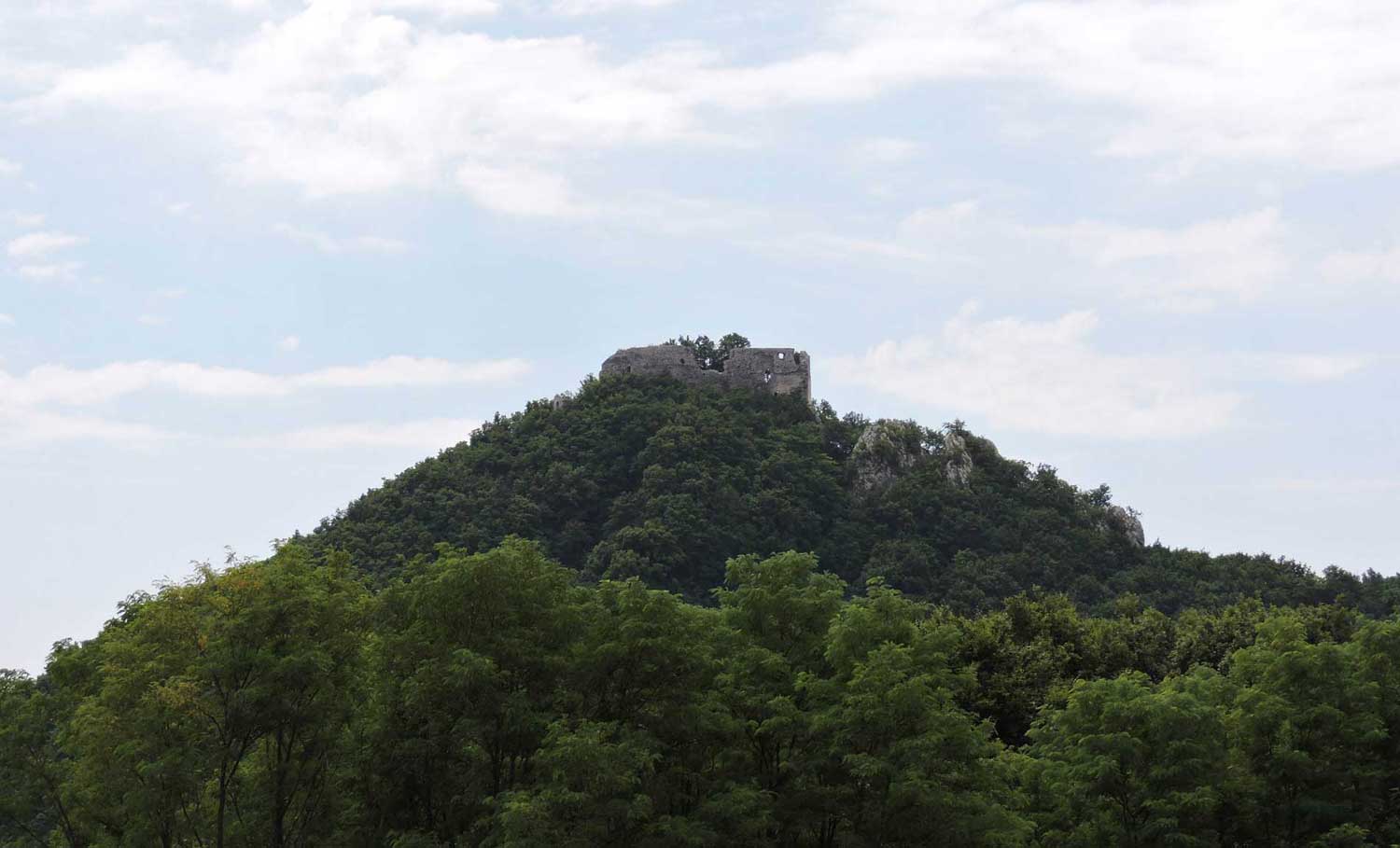
The most striking feature of this landscape is undoubtedly Okić itself. On its south- and west-facing rock faces and among the ruins of the old castle grows the vegetation of the endemic Dinaric community of Croatian pellitory (Parietaria officinalis). Although this plant community is poor in characteristic species — being at the extreme northeastern limit of its range — it is significant as evidence of how plants colonised the area after the last Ice Age.
Among the rock-dwelling plants, particularly noteworthy are the Illyrian endemic Hayek's campion (Silene hayekiana), the endemic grass Kalnik moor-grass (Sesleria kalnikensis), and the coastal species shining bedstraw (Galium lucidum) and blue lettuce (Lactuca perennis), for which this is its only known locality in the Samobor Hills. Around the sun-warmed rock faces grows a woodland of downy oak (Quercus pubescens) and hop hornbeam (Ostrya carpinifolia), in which the typically Mediterranean fern rustyback (Ceterach officinarum) has also been found.
Other trees and shrubs present include manna ash (Fraxinus ornus), Balkan maple (Acer obtusatum), whitebeam (Sorbus aria), cornelian cherry (Cornus mas), barberry (Berberis vulgaris) and hazel (Corylus avellana). Among the ground-layer plants, notable species include black pea (Lathyrus niger), wild asparagus (Asparagus tenuifolius), great stonecrop (Sedum maximum), hairy broom (Cytisus hirsutus), sweet violet (Viola odorata) and numerous other plants found only in such extreme conditions on steep, sun-facing slopes. The vegetation of this woodland comes into leaf and flower considerably later than that of the surrounding forests, which protects it against potential late spring frosts.
The lowland part of the Okić area extends between the streams of Okićnica and Brebernica to the forest of Okićki Lug. This is the flood-plain domain of the pedunculate oak (Quercus robur) and black alder (Alnus nigra). The greater part of the Okić area, however, lies within the belt of Croatian sessile oak (Quercus petraea) and common hornbeam (Carpinus betulus), or sweet chestnut (Castanea sativa), depending on the geological substrate and the associated soil acidity. While the sessile oak forests on alkaline and neutral soils are rich in shrubs and herbaceous plants, chestnut forests grow on acidic ground and are poorer in ground-layer vegetation. The sessile oak forests are distinguished by numerous spring flowers such as wood anemone (Anemone nemorosa, Hepatica nobilis) and crocus (Crocus neapolitanus), as well as Illyrian species including alpine barrenwort (Epimedium alpinum), hacquetia (Haquetia epipactis) and stinking lettuce (Aposeris foetida).
Characteristic species of the chestnut woodland include wood-rush (Luzula nemorosa), hawkweed (Hieracium racemosum), dyer's greenweed (Genista tinctoria), the cosmopolitan bracken (Pteridium aquilinum), common juniper (Juniperus communis) and numerous mosses. On more acidic substrates, various fungi are more abundant — porcini (Boletus spp.) in particular. Between the village of Poljanice and Okić Castle, at an altitude of around 500 metres, grows a distinctive sessile oak woodland with purple moor-grass (Molinia litoralis), containing many bushes of black broom (Cytisus nigricans), German greenweed (Genista germanica) and clumps of wood small-reed (Calamagrostis arundinacea). Mistletoe is common on both chestnut and sessile oak. Within this vegetation zone, black locust (Robinia pseudoacacia) has also been planted to provide stakes for the vineyards.
On the northern slopes of Plešivica, as well as on the north-facing sides of somewhat lower hills and in the deeply incised stream beds, grows the Illyrian montane beech forest (Fagus sylvatica). On the high south-facing slopes of Plešivica it transitions into a distinctive warmer variant, the black hornbeam and beech forest. This forest type lends a particular character to the entire Samobor and Žumberak hills, reflecting their connection with the similarly influenced climate of the northern Croatian littoral.
Alongside the Norway maple (Acer platanoides) and wych elm (Ulmus glabra), one also finds the western European holly (Ilex aquifolium). The abundance of this beautiful evergreen tree is a hallmark of this part of Croatia. At ground level, the evergreen tongue-leaved butcher's broom (Ruscus hypoglossum) and the eastern Alpine jewel, the black hellebore (Helleborus niger macranthus), provide a special adornment. Alongside numerous toothworts (Dentaria enneaphyllos, D. bulbifera and Cardamine trifolia), the beech forests are brightened by wild ginger (Asarum europaeum), cyclamen (Cyclamen europaeum), mezereon (Daphne mezereum) and martagon lily (Lilium martagon). On clearings one also encounters the poisonous plants deadly nightshade (Atropa belladonna) and wolfsbane (Aconitum vulparia).