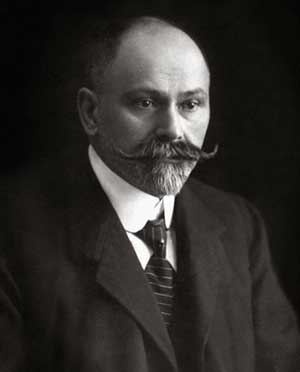
Dr Franjo Bučar (Zagreb, 1866–1946) — literary historian and the driving force behind organised sport in Croatia at the close of the 19th century and the beginning of the 20th — was one of the founders and leading figures of "Hrvatski Sokol" (Croatian Falcon), the first and largest sporting organisation in Croatia and Slavonia. In his journal *Gimnastika* he described an excursion made in 1897 from Zagreb via Zdenčina to Okić, writing as follows:
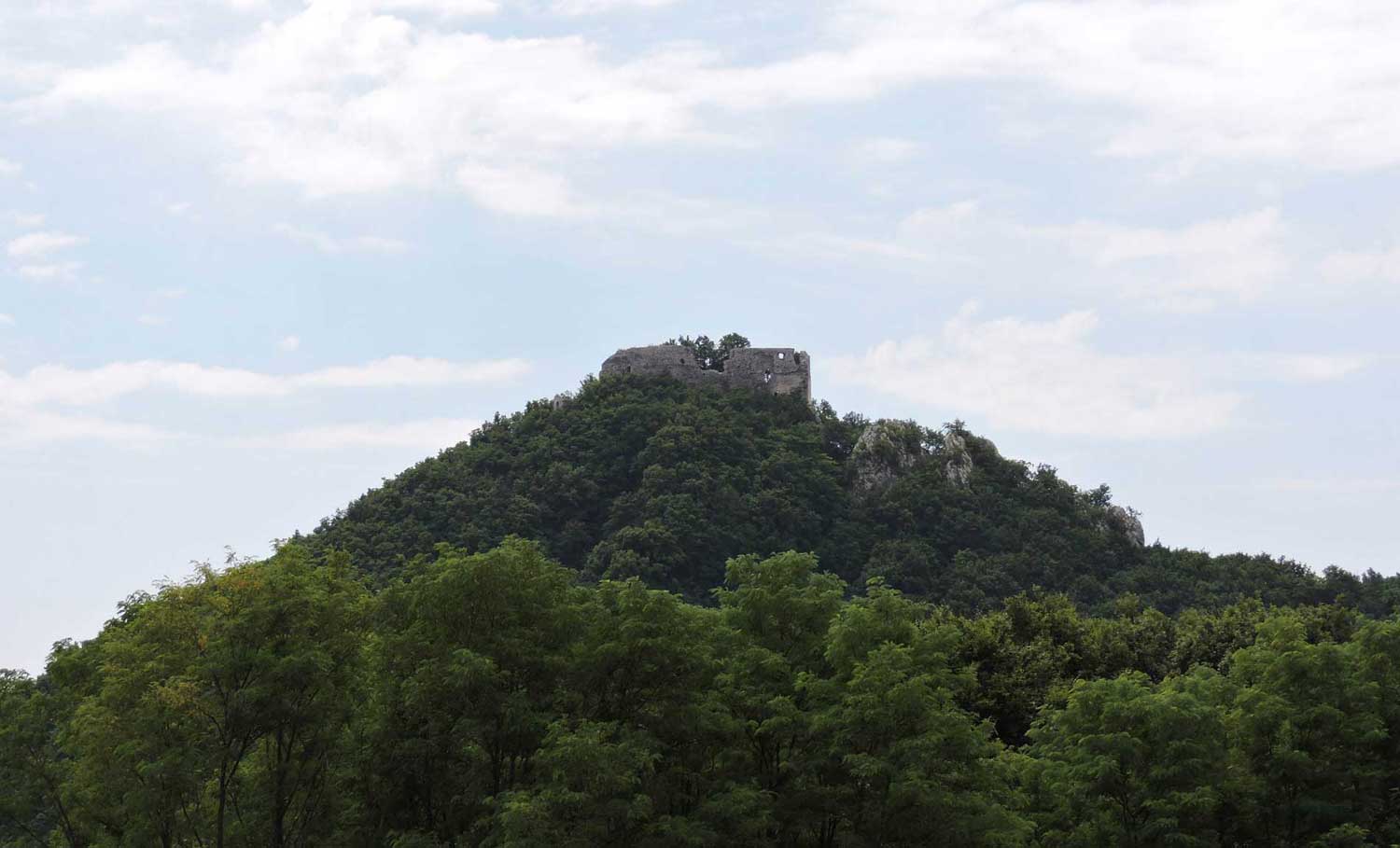
"Eleven excursionists set out from the state railway station under the leadership of Brother Bučar, bound for Zdenčina. The 'Falconers' marched towards Okić Castle to the cheerful playing of the excellent trumpeter Brother Brkić. The path up to the castle — the only route by which it can be approached — was cut reasonably well into the rock some eight years previously at the initiative of the Croatian Mountaineering Society, but has not been maintained since; the bridge that once spanned the chasm dividing the inner from the outer ward has by now completely collapsed, so that the crossing must be made on a bare plank over the void. For anyone prone to dizziness, this is rather unpleasant.
At the first gate of the castle the excursionists had an unwelcome encounter. Basking in the sun on the very threshold was a venomous serpent — locally called a *gad* (*Vipera berus*, the adder) — as if determined to bar their entry. It paid for its boldness with its life, which was ended by a blow of a stick across its back. It was a fine specimen, over half a metre in length. The castle itself is still fairly well preserved — both the upper section of the fortress and the lower chapel, from which there is a magnificent view over Zagreb, the Zagreb Hills, the Sava plain and the Zagorje region.
The peasant who was guiding the excursionists told a story about the castle from the time when the Turks besieged it. Finding that the inaccessible Okić Castle could not be taken by force, they resolved to starve it into surrender. Provisions inside were already running low — only three sacks of wheat and two lambs remained. The besieged slaughtered one of the lambs, flayed it, stuffed the blood-soaked hide with the wheat and hurled it down among the Turks. The Turks, believing that the garrison still had ample food, abandoned their lengthy siege and set off towards Turopolje. There, as they rested, one of the Turks lifted a roasted capon on a spit and called out a challenge for any brave soul who dared to snatch it from him. At that moment, the cannon of Okić Castle fired and blew apart both the roasted capon and the man who had issued the challenge. This was at the same time the signal for the men of Turopolje to attack. They fell upon the Turks and routed them, and received their nobility for this deed.
This story can also be connected with the tower at Đurđevac in Podravina, which was likewise besieged by the Turks, and where the defenders hurled a live cockerel in front of the Turkish tent. In memory of this event, the people of Đurđevac hold a ceremonial pageant every summer — and perhaps something similar could be done beneath Okić!"
Although even Dr Franjo Bučar, back at the end of the 19th century, recognised that it would be fitting to commemorate the successful defence of Okić against the Turks in some fashion — as they do in Đurđevac — nothing has been done in that direction to this day. Those in authority evidently have no interest in the matter, and this is most clearly shown by the fact that the wider public knows nothing of the glorious history of Okić, that children are not taught about it in schools, and that we have even reached the absurd situation where many inhabitants of the Okić area — whether on the Samobor or the Jastrebarsko side — know almost nothing about the history of the castle and the region in which they were born and in which they live. (Author's note.)